In-Play Markets and Live MMA Betting
 Available in US
Table of Contents
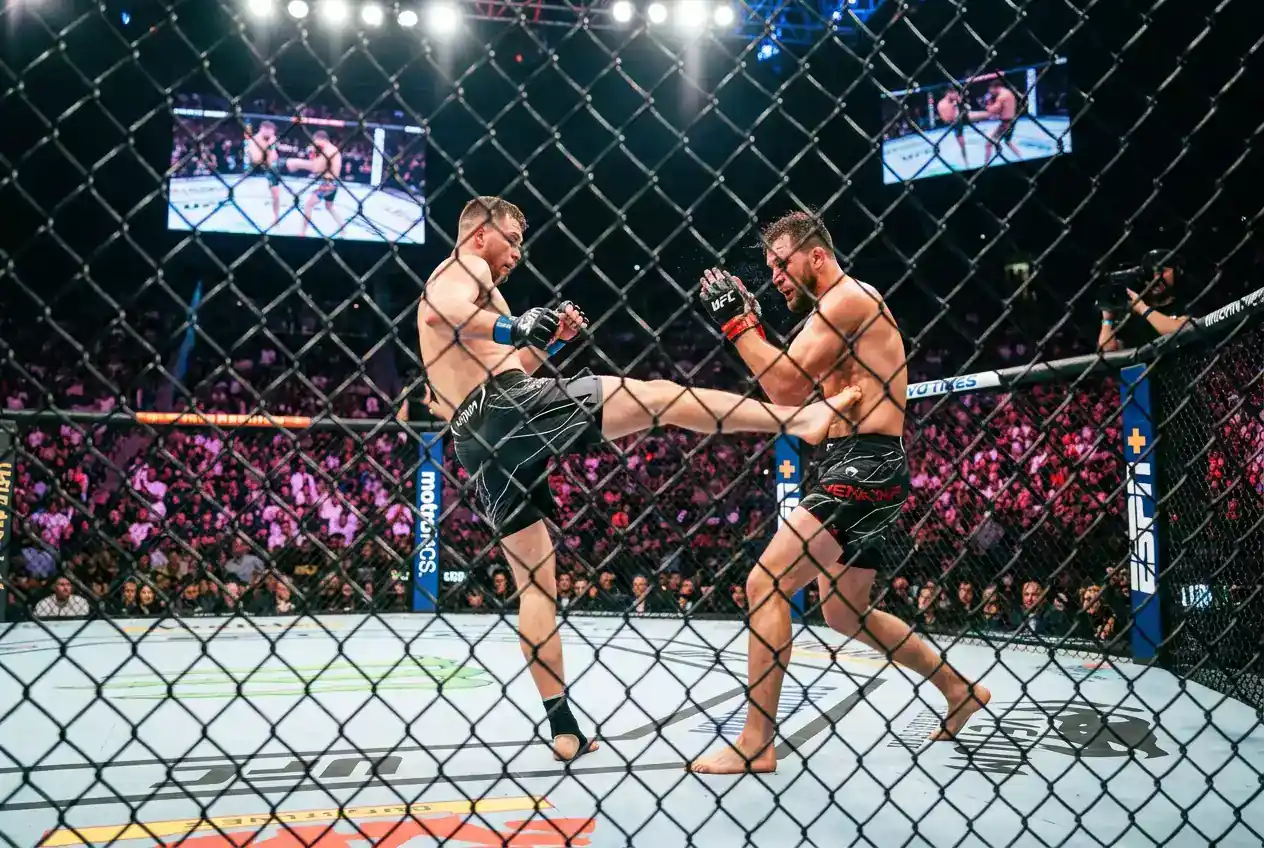
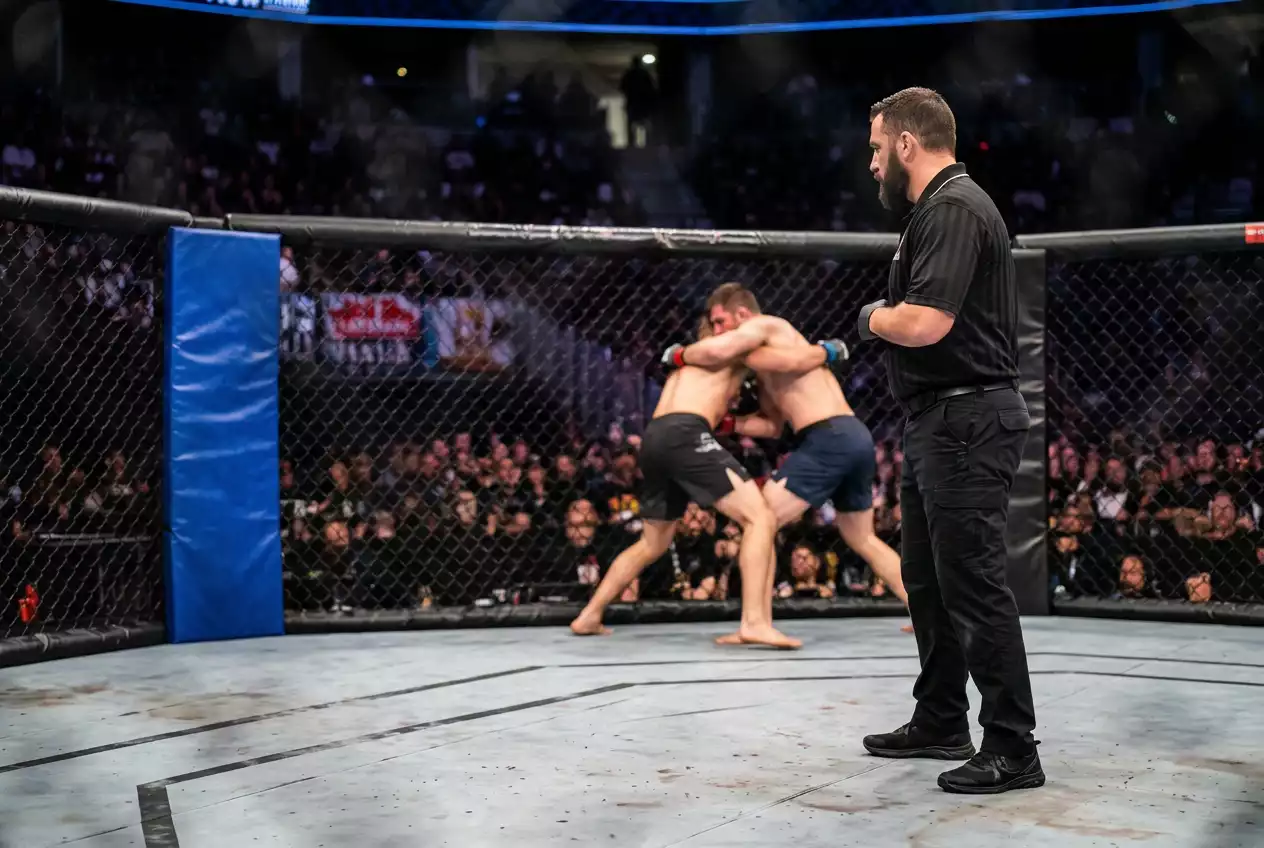
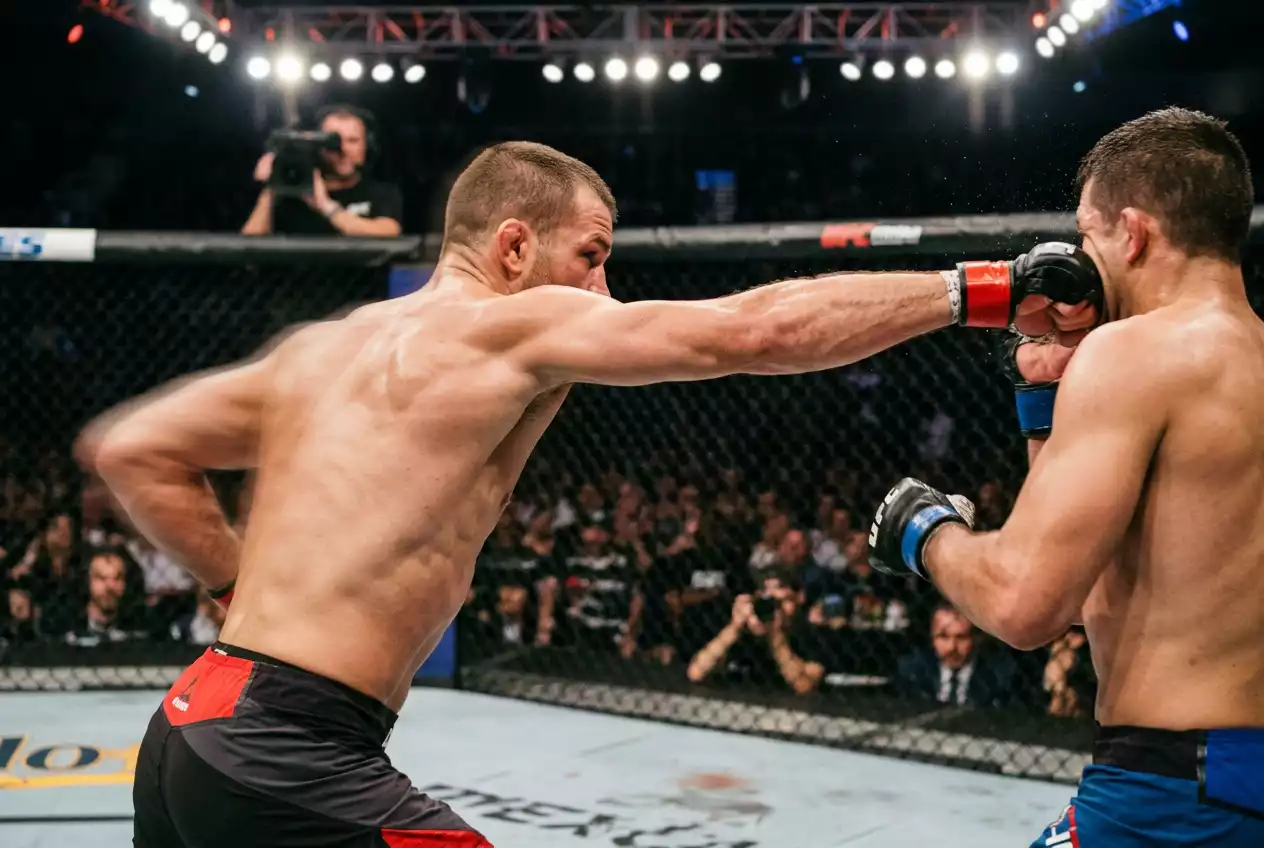
The fight was dead even on my scorecard going into the third round. Then the underdog landed a body kick that buckled the favourite, and within three seconds, literally three seconds, the in-play moneyline flipped. The favourite went from 1.40 to 2.10. The underdog went from 3.20 to 1.75. I had been watching the fight on a slight delay. By the time I reached for my phone, the window had closed.
That is live MMA betting in its purest form: speed, information, and the vanishingly narrow gap between reacting in time and reacting too late. In-play betting already accounts for 60 to 80% of total wagering volume in European markets, per JMP Securities analysis, and that share continues to grow. Analysts project a compound annual growth rate of 25% for in-play markets through the rest of this decade. MMA – with its discrete rounds, dramatic momentum swings, and binary finish outcomes, is arguably the sport best suited to live wagering. It is also the sport where live betting can go spectacularly wrong if you do not understand how the machinery works.
This guide covers that machinery: how real-time odds are generated, what markets you can access mid-fight, how cash out works, and – critically – the tactical frameworks that separate profitable live bettors from those who simply chase the action. If you already understand pre-fight betting mechanics and want to know what changes once the cage door closes, read on.
When betting in-play, understanding the dynamics of MMA round betting is essential for catching shifting momentum.
Real-Time Odds Generation via AI Engines
Pre-fight odds are set by human traders who study fighter profiles, historical data, and market flows over days or weeks. In-play odds have no such luxury. Once the cage door closes, the odds engine must process live fight data – strikes landed, takedowns attempted, knockdowns, position changes, clinch time, and recalculate probabilities within seconds. The technology that makes this possible has transformed MMA from a sport where live betting was crude and infrequent to one where the odds board updates in near real time between exchanges.
The core mechanism is a pricing model fed by official data. Licensed data collectors at cageside input fight events as they happen: significant strike landed to the head, takedown secured, fighter returns to feet, clinch initiated, round ends. Each event triggers a recalculation of every open market – moneyline, method of victory, round totals, fighter props. The model weights each event according to its historical impact on fight outcomes, producing new probabilities that the odds engine translates into prices.
Before 2026, most MMA in-play pricing relied on manual adjustments by human traders watching the fight, a slow, subjective process that limited the number of markets available during a live bout. The launch of dedicated AI pricing for MMA changed the game fundamentally. Automated models can process thousands of data points per second without the cognitive limitations of a human trader, enabling both faster updates and a wider range of live markets. The gap between a significant strike landing and the odds adjusting has shrunk from minutes to moments.
For bettors, this speed creates both opportunity and constraint. If you are watching a fight and spot a momentum shift before the model fully prices it in, you have a window. But that window is measured in seconds, not minutes, and the model is getting faster with every event.
There is an important distinction between the two types of in-play updates. Between-round updates occur during the natural 60-second break and reflect a comprehensive reassessment of the fight’s trajectory – similar to half-time odds adjustments in football, but more frequent. Mid-round updates occur during active fighting and respond to discrete events: a knockdown, a submission attempt, a doctor’s check. Between-round updates are more analytically reliable because the model has a clean data snapshot. Mid-round updates are faster but noisier, because the fight is still unfolding and the model must price incomplete information. Understanding this distinction helps you decide when to engage with live markets and when to wait.
AI Pricing Models and Official Data Feeds
SWA and Sportradar launched what they described as the first industry-specific in-play MMA betting model in January 2026, built on official data feeds from UFC and PFL. SWA CEO Caspar Hobbs described the system as using data-driven generative AI modelling that outputs tens of thousands of potential outcomes every second, pricing each one in real time. That is not marketing language – it is a description of a Monte Carlo simulation engine running at production speed, where the model generates thousands of possible remaining fight trajectories based on current fight state, then prices each market based on the distribution of those simulated outcomes.
The official data feed is critical. Unlike unofficial data scraped from broadcasts with inherent delay, official feeds capture events at the source, the cageside scoring system, with minimal latency. Sportradar CEO Carsten Koerl has emphasised that integrity and data reliability enable the expansion of live betting markets. Without trusted data, the model cannot function. With it, the model can offer markets that were previously impossible to price live: specific fighter strike totals, round-by-round method of victory, and even real-time micro-parlays combining multiple in-fight outcomes.
For the average UK punter, the practical implication is that live MMA odds are no longer a rough guess updated by a trader between rounds. They are algorithmically generated probabilities that respond to the fight as it unfolds. Understanding this does not give you an edge over the model. But it does tell you what the model cannot see – things like a fighter’s body language, corner instructions between rounds, or a subtle limp that the data feed does not capture.
Markets Available During a Live MMA Fight
Not every pre-fight market survives the transition to in-play. Some markets close when the fight starts and never reopen. Others update continuously. The availability depends on the operator, the data feed, and the specific fight’s profile.
Markets that are almost always available in-play on UK platforms include: the fight moneyline (updated between rounds and sometimes between significant exchanges), next round winner, and will the fight go the distance. Method of victory markets are sometimes available between rounds but are often suspended during active fighting because the probability shifts too rapidly for the model to price safely.
Round-by-round betting is the market most naturally suited to in-play. Between rounds, you have a natural pause – roughly 60 seconds – during which the odds engine resets and the market reopens. You can assess the previous round, watch the corners for tactical cues, and decide whether the trajectory of the fight supports a bet on the next round’s outcome. This structured pause does not exist in football or tennis, and it gives MMA live betting a rhythm that favours the attentive bettor.
Fighter prop markets in-play remain limited on most UK platforms, though the trend is toward expansion. As the AI models become more sophisticated, expect to see live markets on metrics like cumulative significant strikes, takedown attempts in the next round, and probability of a finish in the current round. The infrastructure is already in place, the remaining constraint is operator risk tolerance.
One market that deserves specific attention is the “next round winner” bet. This is available between rounds on most major UK operators and functions essentially as a single-round moneyline. If you believe Fighter A dominated round one and will carry that momentum into round two, backing him as the next-round winner pays a shorter price than the fight moneyline but settles within five minutes. Conversely, if you think Fighter B made adjustments in the corner and will come out stronger, the next-round line on Fighter B may still reflect the round-one dominance of his opponent. These round-by-round markets are the most analytically tractable in-play bets in MMA because they isolate a short, observable time period rather than asking you to predict the entire fight’s trajectory from a mid-point.
Stay ahead of the action with real-time updates and strategies from our trusted UFC betting site.
Micro-Parlays and Social Betting: The Next Wave
Micro-parlays are the convergence point where live betting technology meets social media culture. The concept is simple: combine two or three in-fight outcomes into a single bet that settles within minutes. Fighter A to win round two plus over 15 significant strikes in that round. Fighter B to secure a takedown and win by submission within the next five minutes. These are not traditional accumulators spread across a fight card – they are hyper-specific, time-compressed bets on what happens next.
Mobile devices already generate 55% of combat sports betting revenue globally, per Verified Market Reports, and micro-parlays are designed specifically for the mobile-first audience. Short attention spans, the dopamine hit of fast settlement, and the shareable nature of an improbable micro-parlay hitting, all of these factors drive engagement. Operators are investing heavily in this format because it increases handle without requiring bettors to watch a full event.
The risk profile of micro-parlays mirrors accumulators in miniature: each additional leg reduces the win probability dramatically. A two-leg micro-parlay with individually reasonable selections might carry a combined probability of 20-25%. The payout reflects the difficulty, but the margin loaded onto these products is typically higher than on standard single-market bets. The entertainment value is real. The long-term profitability, for most bettors, is not.
Social betting adds another layer. Some platforms now allow users to share their micro-parlay slips publicly, creating a social proof effect where popular bets attract followers regardless of the underlying maths. A micro-parlay that gets shared 500 times on social media is not 500 times more likely to hit, but the communal excitement of tracking a shared bet through a live fight is a powerful engagement tool that operators are keen to develop further. Be aware of the distinction between entertainment and edge: social validation is not statistical validation.
Cash Out Mechanics in MMA: Timing and Trade-Offs
Cash out is the most psychologically loaded feature in live MMA betting. Your pre-fight bet is winning. The fighter you backed dominated round one. The cash-out button glows with a number, less than the full payout, but more than your stake. Do you take the guaranteed profit and walk away, or do you let the bet ride and risk a second-round reversal?
The mechanics are straightforward. Cash out is a real-time buyback offer from the operator. The price reflects the current in-play odds minus a margin. If your pre-fight bet was placed at 2.50 and the live odds on your fighter have shortened to 1.40, the cash-out offer will be somewhere between your original stake and the full potential payout – skewed toward the lower end because the operator takes a cut on the transaction.
When does cashing out make strategic sense? In my experience, only in two scenarios. First, when new information emerges during the fight that fundamentally changes your pre-fight thesis. If you backed a striker and he broke his hand in round one – visible swelling, changed stance, reduced output – cashing out locks in profit based on a thesis that no longer holds. Second, when the cash-out amount exceeds your expected value given the updated in-play situation. This requires a quick mental calculation that most bettors skip in the heat of the moment.
When does cashing out destroy value? Almost every other time. The margin on cash-out offers is typically 5-15%, meaning you are selling your position at a discount. If your pre-fight analysis was sound and nothing has changed, cashing out early is paying the operator a premium to relieve your anxiety. Over hundreds of bets, that premium compounds into significant lost value. The discipline to let winning bets run – even through uncomfortable moments – is one of the hardest skills in live betting.
Tactical Approaches to In-Play MMA Betting
The most profitable live MMA bettors I know share one characteristic: they decide what they are looking for before the fight starts. They do not react to live odds randomly. They enter the fight with a pre-defined scenario – “if Fighter A loses round one but is not visibly hurt, the live odds on him will overcorrect, and I will back him at an inflated price”, and execute only if that scenario materialises.
This pre-fight planning converts live betting from an emotional reaction into a conditional strategy. You are not gambling on chaos. You are setting traps for predictable market overreactions. MMA produces these overreactions reliably because a single knockdown or takedown shifts the visual momentum of a fight far more than it shifts the actual probability of the final outcome. A fighter who gets dropped in round one but recovers immediately is not 40% less likely to win the fight – yet the live odds often move as if he is.
Between-round betting is the tactically cleanest window. You have 60 seconds to assess the previous round, compare it to your pre-fight expectations, and decide whether the updated live odds present value. In-play betting during active fighting is faster and riskier, the odds move mid-exchange, your stream might lag behind the live data feed, and the emotional intensity of watching a fight unfold makes calm analysis nearly impossible.
My own approach: I place 80% of my live bets between rounds and 20% during active fighting. The between-round bets are planned and conditional. The mid-fight bets are reserved for extreme dislocations, moments where the live odds have clearly overreacted to a single event and the correction window is still open. Even then, the stakes are small. Live betting is a supplement to pre-fight analysis, not a replacement for it.
Latency, Volatility, and the Risks of Chasing Live Bets
Live MMA betting amplifies every cognitive bias that plagues pre-fight wagering, and adds a few new ones. Recency bias hits hardest: the last exchange you watched dominates your perception of the entire fight. A fighter who controlled nine minutes of a round but got tagged with a clean shot in the final ten seconds “feels” like he is losing, even if the scorecard tells a different story.
Latency is a structural disadvantage for retail bettors. Your video stream – whether through a dedicated sports app, a broadcaster, or a social media feed, runs anywhere from 3 to 30 seconds behind the live action. The cageside data feed that powers the odds engine has no such delay. By the time you see a knockdown on your screen, the model has already repriced every market. You are trading on stale information against a counterparty with a faster feed. This asymmetry is not a bug – it is the architecture of live betting, and it favours the house.
Volatility is the final risk. MMA fights are short – 15 or 25 minutes at maximum. Within that window, the probability of each fighter winning can swing by 30 or 40 percentage points multiple times. A fighter can be losing badly, land one punch, and end the fight. This volatility makes live MMA betting thrilling as entertainment and treacherous as a profit strategy. The discipline required to sit through a losing position without panic-selling (via cash out) or doubling down (via additional live bets on the other side) is substantial. Most bettors discover this discipline is harder to maintain at midnight watching a fight from their sofa than it sounds in a guide like this one.
The countermeasure to all three risks, recency bias, latency, volatility, is the same: pre-commitment. Decide your live betting budget before the fight starts. Write down the specific scenarios you will bet on. Set a maximum number of live bets per event. When the adrenaline spikes and the cash-out button pulses, your pre-committed rules act as a circuit breaker between impulse and action. Without that structure, the speed and excitement of live MMA betting will extract more from your bankroll than it adds.
Frequently Asked Questions
How quickly do MMA in-play odds update between rounds?
On platforms using AI-powered pricing models with official data feeds, odds typically update within 5-15 seconds of the round ending. The between-round break of approximately 60 seconds gives the model time to process the round’s events and recalculate every open market. During active fighting, updates can occur within seconds of significant events like knockdowns or takedowns, though some markets may be temporarily suspended during rapid exchanges.
Can I cash out a live MMA bet mid-fight on UK platforms?
Most major UKGC-licensed operators offer cash out on MMA bets, including during live fights. The cash-out price updates in real time based on current in-play odds, minus the operator’s margin on the transaction. Cash out may be temporarily unavailable during extremely fast-moving sequences or in the final moments of a round. The offered amount will always be less than the full potential payout, the gap represents the operator’s fee for allowing early settlement.
What data sources power real-time MMA odds engines?
The leading real-time MMA pricing models use official data feeds from promotions like UFC and PFL, collected by licensed data partners at cageside. These feeds capture fight events, strikes, takedowns, knockdowns, position changes – as they happen, with minimal latency. The AI pricing engine processes this data through simulation models that generate thousands of possible remaining fight outcomes per second, then translates those probability distributions into live odds across every open market.
Is live MMA betting riskier than pre-fight wagering?
Yes, for most bettors. Live betting introduces latency disadvantage (your stream lags behind the data feed), amplified emotional bias (decisions made under time pressure during exciting moments), and higher effective margins (cash-out fees, wider in-play spreads). Pre-fight betting allows calm analysis, deliberate stake sizing, and comparison shopping across operators. Live betting can supplement a pre-fight strategy, but treating it as a standalone approach typically produces worse long-term results.
Published by the Betting on mma Fights team.