Mobile Platforms and MMA Betting Apps in the UK
 Available in US
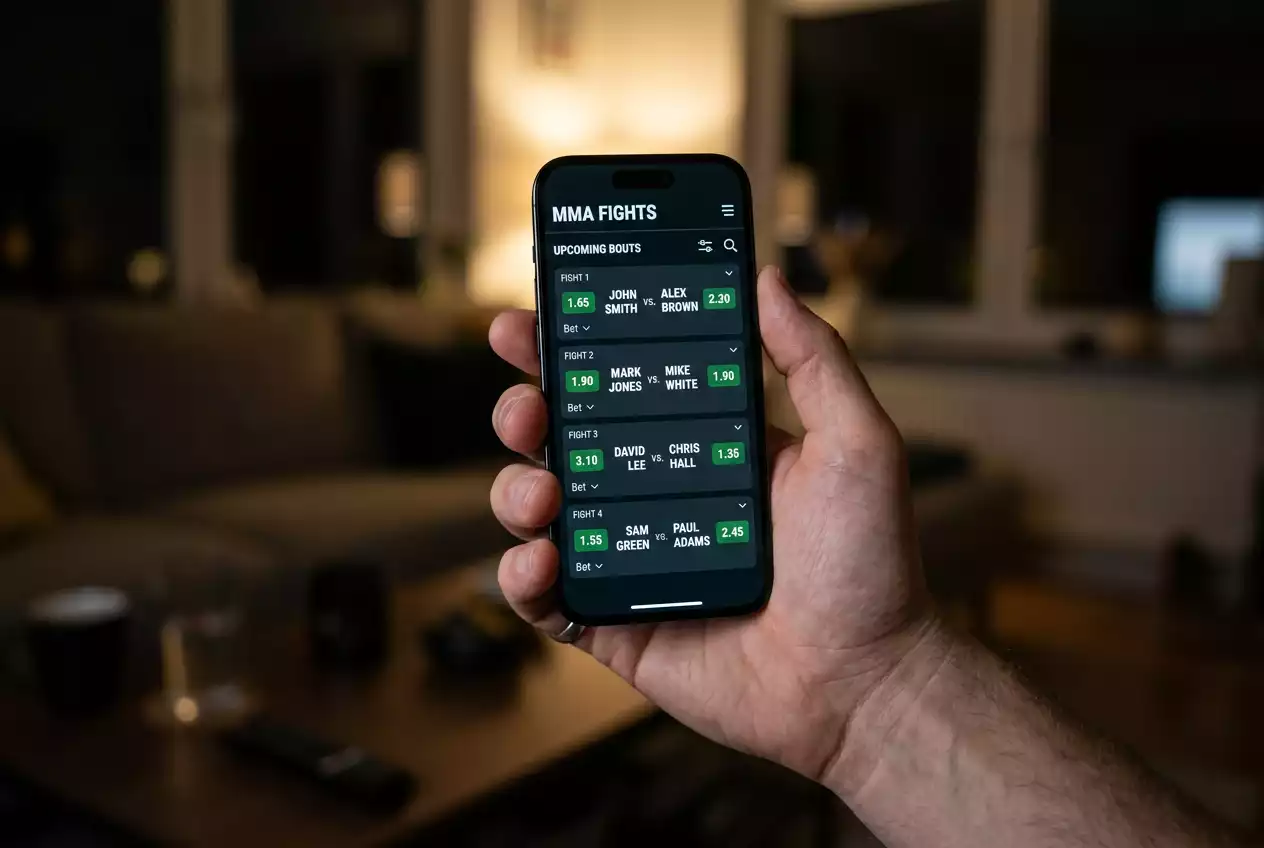
I placed my first mobile MMA bet in the back of a taxi, thirty seconds before a fight started, on a phone screen I could barely see. The bet won. The experience was terrible. The app lagged, the odds refreshed slowly, and I nearly tapped the wrong fighter because the button spacing was designed for fingers smaller than mine. Since then, I’ve tested every major MMA betting app available to UK punters, and the gap between the best and worst is wider than you’d expect from platforms that all hold the same UKGC licence.
Crucial Mobile Features for UK Fight Bettors
Mobile devices generated 55% of revenue in the MMA and boxing betting market in 2023, per Verified Market Reports. That percentage has only grown since. Most UK bettors now place the majority of their MMA wagers on phones, which means app quality directly affects your betting experience – and in some cases, your results.
The features I prioritise are speed of odds updates, depth of MMA market coverage, and the quality of the live betting interface. Speed matters because MMA odds can shift rapidly in the hours before a fight – weigh-in results, injury news, and training camp footage all move lines, and a slow-refreshing app shows you stale prices. I’ve been caught placing bets at odds that had already moved by the time the platform processed my slip. On a well-built app, odds refresh in near real-time and the slip warns you before confirmation if the price has changed.
Market depth on mobile should mirror what’s available on desktop. Some operators truncate their MMA prop offerings on the mobile app, showing only moneyline and method of victory while the desktop version carries round betting, strike props, and bet builders. If you’re serious about MMA betting, check whether the app gives you the full menu before committing to a platform.
Notification systems are the underrated mobile feature. A good app sends push alerts for odds movements on fights you’ve expressed interest in, fight cancellations, and weigh-in results. These alerts convert your phone from a passive betting terminal into an active intelligence tool – one that flags changes while you’re going about your day rather than requiring you to manually check the odds board every few hours.
UKGC Licensing and App-Specific Protections
Every MMA betting app available to UK residents must be operated by a UKGC-licensed company. The UKGC carried out 9,700 compliance actions in 2024/2025 – more than double the prior year – and mobile platforms are subject to the same regulatory scrutiny as desktop sites. There is no separate “app licence.” The operator’s licence covers all channels.
What differs on mobile is how responsible gambling tools are presented. UKGC requirements mandate that deposit limits, loss limits, session time reminders, and self-exclusion options are accessible within a few taps. Some apps bury these tools deep in the settings menu; others surface them prominently on the home screen. I consider prominent placement a sign of a well-run operation – not because I think every bettor needs constant reminders, but because operators who make these tools easy to find tend to take their broader regulatory obligations seriously too.
App permissions are worth checking. A legitimate MMA betting app needs network access and possibly location services (to confirm you’re in the UK). It does not need access to your contacts, camera, or files beyond what’s required for identity verification. If an app requests permissions that seem unrelated to betting, that’s a flag.
Live MMA Betting on Mobile: Latency and Usability
In-play betting on MMA fights is where mobile app quality matters most. Analysts project a compound annual growth rate of 25% for in-play betting markets this decade, per JMP Securities data via Nasdaq, and MMA’s round-by-round structure makes it a natural fit for live wagering. But in-play on mobile introduces latency challenges that don’t exist on desktop.
The cycle works like this: you watch the fight (often on the same device or a nearby screen), spot a moment where the odds feel wrong, open the app, find the in-play market, and try to place a bet before the odds adjust. That entire sequence needs to happen in seconds. An app with a sluggish interface, slow page transitions, or a bet slip that takes two taps too many to confirm will cost you opportunities. I’ve missed live bets because the app required me to scroll through markets rather than jumping directly to the in-play section.
The best mobile apps for live MMA betting feature a dedicated in-play tab that loads the active fight’s markets immediately, with one-tap bet placement and instant odds refresh. Some also integrate live fight statistics (strikes landed, takedowns attempted) directly into the betting interface, which eliminates the need to switch between apps for data. That integration is still evolving in the UK market, but it’s the direction the industry is heading – and the apps that get there first will have a significant advantage for serious combat sports bettors operating within the UK regulatory framework.
Security, Deposits, and Withdrawals on Mobile
Security on mobile betting apps operates on two layers: the app itself and your device. On the app side, UKGC-licensed platforms are required to encrypt all data transmissions, protect stored payment information, and implement identity verification before allowing withdrawals. Two-factor authentication (2FA) is increasingly standard – if your app offers it, turn it on.
Deposit methods on UK MMA betting apps typically include debit cards (credit card gambling has been banned in the UK since April 2020), bank transfers, and e-wallets. Processing times vary: debit card deposits are usually instant, while bank transfers can take one to three business days. Withdrawals follow the same channels but in reverse, with debit card and e-wallet withdrawals typically processed within 24-48 hours.
One mobile-specific security consideration: avoid placing bets on public Wi-Fi networks. The data interception risk is low on a properly encrypted app, but it’s an unnecessary gamble with your financial information. Use mobile data or a trusted private network. The same applies to biometric login – if your app supports fingerprint or face recognition, use it. It’s faster than a password and more secure against shoulder-surfing, which is a real concern when you’re betting on your phone in a pub during a live event.
Are MMA betting apps regulated differently from desktop sites in the UK?
No. The UKGC licence held by an operator covers all channels, including mobile apps, desktop websites, and telephone betting. The same regulatory requirements for fair odds, responsible gambling tools, customer fund protection, and dispute resolution apply equally to the mobile app and the desktop site. If an operator is licensed for one, they are licensed for all.
Which payment methods work best for mobile MMA betting?
Debit cards and e-wallets offer the best combination of speed and convenience for mobile MMA betting in the UK. Debit card deposits are typically instant, and most e-wallets process both deposits and withdrawals within 24 hours. Bank transfers work but are slower. Credit cards are not permitted for gambling transactions in the UK. Choose a method you are comfortable using on your phone, and ensure your chosen platform supports it before registering.
Published by the Betting on mma Fights team.