Fighter Metrics and MMA Betting Statistics
 Available in US

Early in my betting career, I made decisions based on records. 12-2 versus 8-4? Easy pick. Then a fighter with a 7-5 record outclassed a 14-1 prospect over three rounds using nothing but superior positioning and volume striking. Records tell you who has won. Statistics tell you how they win, and how is what actually matters when you’re putting money on the outcome.
Striking Output Metrics: Accuracy and Damage Absorption
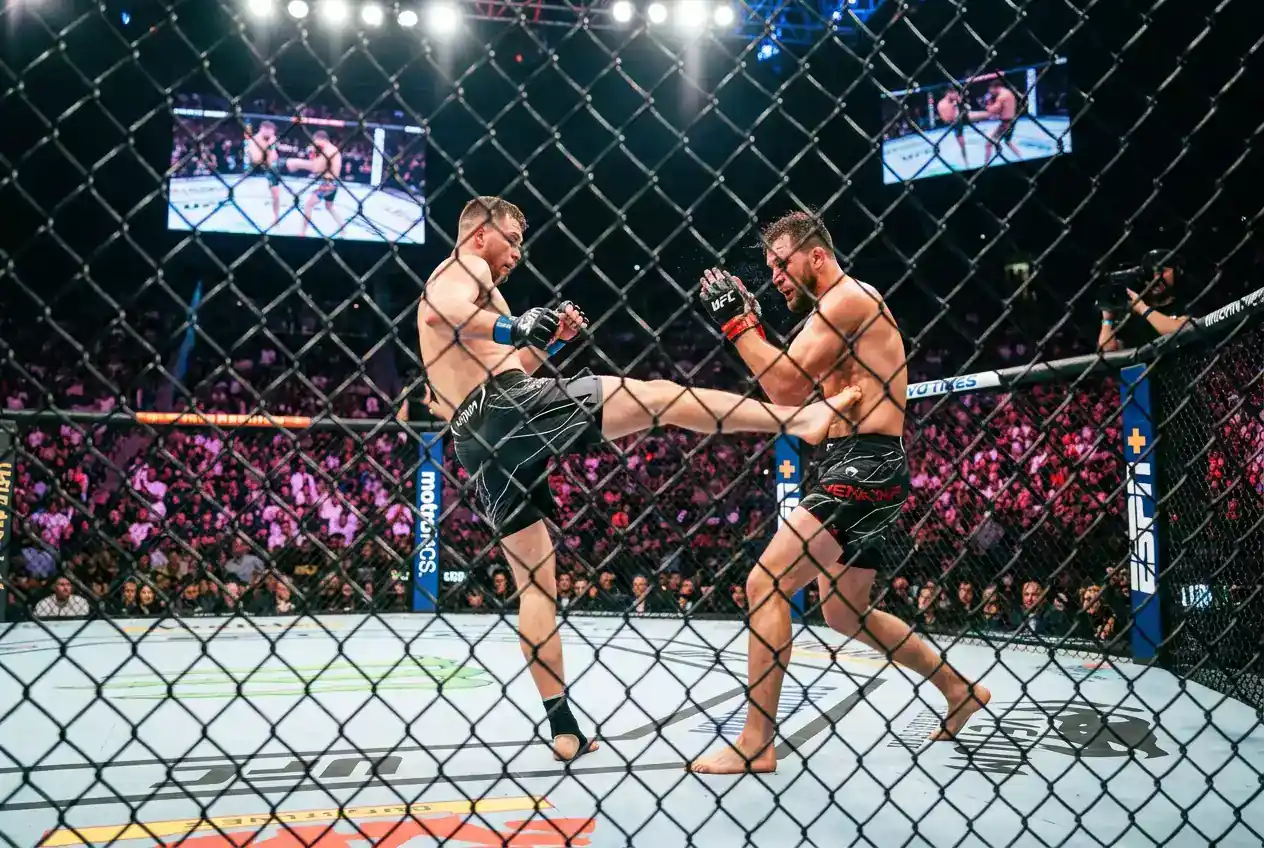
Significant strikes per minute (SSpM) is the closest thing MMA has to a universal output metric. It measures how many meaningful strikes a fighter lands in each minute of cage time – not jabs from range that barely register, but strikes that the UFC’s statistical tracking system classifies as “significant” (distance, clinch, or ground strikes with meaningful impact).
The number itself is useful, but context matters more. A SSpM of 6.0 from a pressure fighter who walks forward and throws volume reads differently than the same number from a counter-striker who waits for openings. The pressure fighter’s output is consistent – you can expect roughly that volume every fight. The counter-striker’s output is matchup-dependent: high against aggressive opponents who give them opportunities, low against patient fighters who refuse to lead.
Striking accuracy – the percentage of strikes landed relative to strikes attempted – filters quality from quantity. A fighter landing 55% of their significant strikes is efficiently picking shots, which correlates with both scoring and damage. A fighter at 38% is throwing volume but connecting less cleanly, which means the raw SSpM overstates their effective output.
Absorption rate (significant strikes absorbed per minute, or SApM) completes the picture. The differential between SSpM and SApM is the single most predictive striking metric I use. A fighter with a SSpM of 5.5 and a SApM of 2.8 is winning the striking exchanges decisively. A fighter with 5.5 and 5.0 is in a phone booth brawl every time they step in the cage. Both fighters technically “land a lot of strikes.” Only one of them does it without taking nearly as many back.
Takedown Accuracy, Takedown Defence, and Submission Attempts
The grappling statistics in MMA are underused by the betting public, and that’s exactly why they offer disproportionate value. UFC tracks more than 300 million fans globally across 210 countries, per Paramount partnership data, and the statistical depth available for major promotions has never been greater. Yet most casual bettors still evaluate fighters based on knockouts and records, leaving grappling data as an exploitable blind spot.
Takedown accuracy measures the percentage of takedown attempts that successfully bring the opponent to the mat. A fighter landing 45% or more of their takedowns has a reliable weapon. Below 30%, and the takedown attempt is more of a threat than a reality – they’re shooting but not finishing, which can actually work against them by depleting energy and ceding position.
Takedown defence – the percentage of opponent takedown attempts successfully stuffed – is arguably the most important defensive statistic in MMA. A fighter with 85% takedown defence can keep the fight standing against almost any wrestler. A fighter at 55% is getting taken down roughly every other attempt, which fundamentally changes the fight’s dynamic and usually the judge’s scorecards.
Submission attempts per fifteen minutes of fight time is the grappling equivalent of SSpM. A fighter who averages two or more submission attempts per fight is an active, dangerous grappler. One or fewer attempts suggests their ground game is positional (control-oriented) rather than finishing-oriented. For method of victory betting, this distinction is critical: a high submission attempt rate supports the submission method at favourable odds, while a low rate suggests decision or TKO is the more likely outcome even from dominant grappling positions.
Reach Differential and Stance Matchup Data
Reach – measured as arm span, from fingertip to fingertip – is one of the most straightforward physical advantages in MMA. UFC boasts approximately 700 million fans globally and roughly 330 million social media followers, per TKO Group Holdings data. That massive audience has access to fighter reach data for every scheduled bout, and yet the betting implications of reach differentials are consistently underweighted.
A reach advantage of three inches or more in the lighter divisions (flyweight through lightweight) is significant because it allows a fighter to land strikes from a distance their opponent cannot reciprocate. The longer-armed fighter can score without entering the danger zone. In my tracking, fighters with a reach advantage of four inches or more win at rates that consistently exceed their implied odds probability – not by a huge margin, but enough to factor into the analysis.
Stance matchups (orthodox versus southpaw, or southpaw versus southpaw) generate predictable changes in fight dynamics. Orthodox-versus-southpaw bouts produce more lead-hand counters and fewer takedowns, because the angle of attack is less conventional for wrestlers. Southpaw fighters are also historically undervalued in MMA odds, partly because they’re rarer and partly because the betting public doesn’t fully account for the discomfort factor they impose on orthodox fighters who’ve spent most of their career training against the standard stance.
Where to Find Reliable MMA Statistics in the UK
Data quality varies enormously across MMA stat platforms, and using unreliable numbers is worse than using no numbers at all. The UFC’s official statistics portal provides the baseline data for all fights held under the UFC banner – significant strikes, takedowns, control time, submission attempts. This data is the industry standard, and every serious analysis starts here.
Third-party platforms aggregate and contextualise that data in ways the official portal does not. Some offer predictive models, finish probability projections, and historical trend analysis. The most useful feature for betting purposes is the ability to filter statistics by opponent quality – a fighter’s striking output against top-fifteen opponents versus unranked opponents reveals how their performance scales under pressure.
For non-UFC promotions (PFL, Cage Warriors, ONE Championship), statistical coverage is thinner. PFL’s SmartCage technology generates its own data, but availability varies. Cage Warriors and regional UK promotions have limited statistical tracking, which means you’ll need to supplement with manual observation – actually watching the fights and noting patterns that the numbers can’t capture.
My workflow: pull the official stats, compare them against third-party contextual data, then watch at least two recent fights per fighter on the card I’m betting. The numbers narrow the field; the video confirms or contradicts the story the numbers tell. Neither alone is sufficient.
How do you read UFC fighter statistics for betting purposes?
Start with the striking differential – significant strikes landed per minute minus significant strikes absorbed per minute. A positive differential indicates a fighter who is winning striking exchanges. Then check takedown defence percentage (above 75% means the fight is likely to stay standing) and takedown accuracy (above 40% indicates a credible wrestling threat). Compare these figures between the two fighters in a matchup to identify where the statistical advantage lies, and cross-reference with the betting odds to determine whether the market is accurately pricing those advantages.
Which free stat platforms are most reliable for MMA data?
The UFC’s official statistics portal is the primary source for fights held under the UFC banner. Several well-established third-party platforms aggregate this data and add contextual layers like opponent quality filters and trend analysis. For the most reliable free data, prioritise platforms that source directly from official records rather than user-submitted information. Cross-reference any third-party statistics against the UFC’s official numbers to verify accuracy before incorporating them into your betting analysis.
Prepared by the Betting on mma Fights editorial staff.