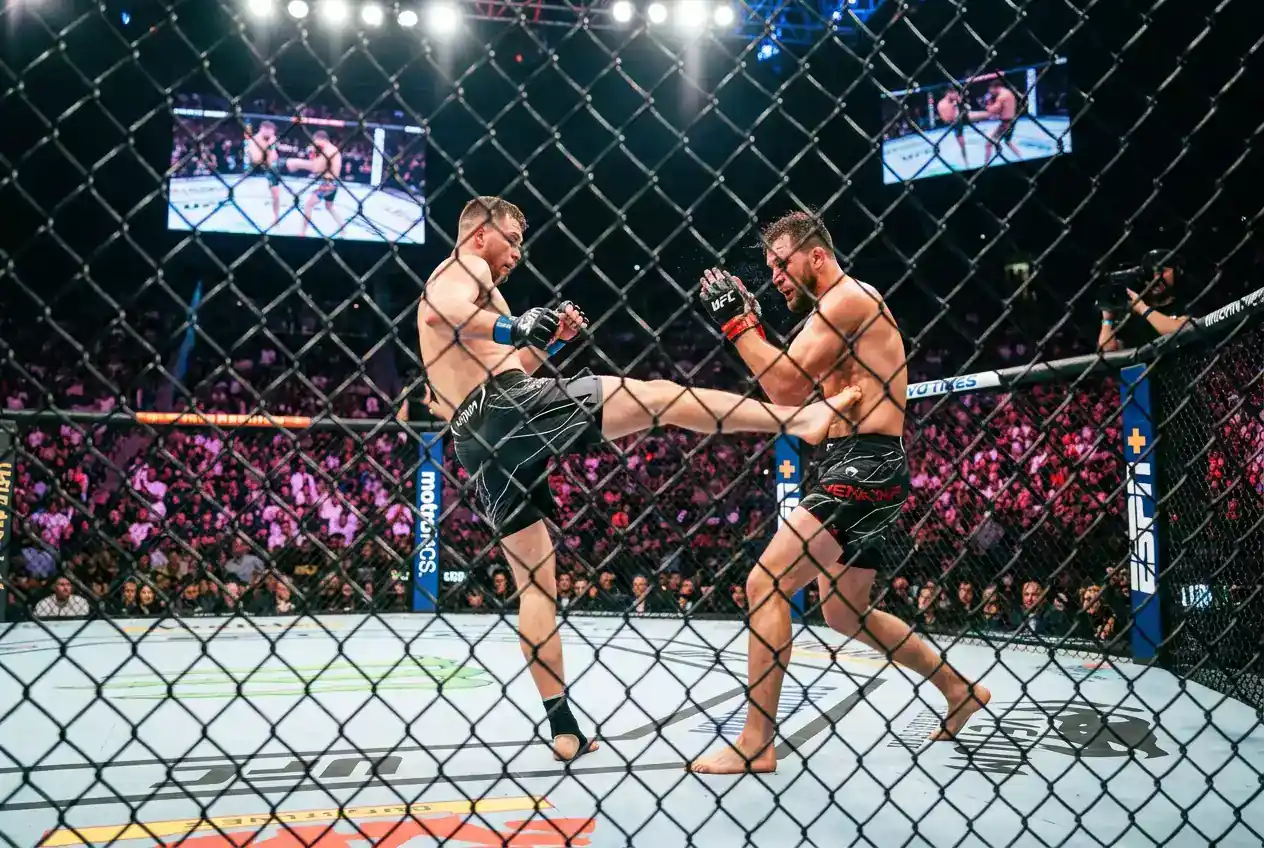
Fight Winner Prices and MMA Moneyline Bets
 Available in US

Every MMA bet I’ve ever placed started with one question: who wins this fight? That’s the moneyline in its purest form – no rounds, no method, no exotic conditions. Just pick the fighter who gets their hand raised. It’s the market most beginners gravitate toward, and for good reason. But simplicity doesn’t mean the moneyline is simple to beat. After nine years of betting combat sports, I can tell you that the moneyline is where most of my biggest wins and most painful lessons have come from.
Calculating Returns on MMA Moneyline Markets
The moneyline strips MMA betting down to a binary outcome: Fighter A or Fighter B. No spread, no handicap, no points total. You back one of them, and if that fighter wins – by knockout, submission, decision, disqualification, or any other official result – your bet pays out.
On UK platforms, moneyline odds are typically displayed in fractional format. A favourite might be listed at 1/3, meaning you’d need to stake GBP 3 to win GBP 1 (plus your stake back). An underdog at 5/2 means a GBP 2 stake returns GBP 5 in profit. In decimal format, those same odds read as 1.33 and 3.50 respectively – the decimal number represents your total return per GBP 1 staked, including the original stake.
The gap between the two fighters’ odds reflects the market’s assessment of probability. When you see a fighter at 1/5 against someone at 7/2, the market is saying the favourite has roughly an 83% implied chance of winning. Whether that number accurately represents reality is where the betting edge lives – and where most people get it wrong.
Heavy Favourites and Long-Shot Underdogs: What the Numbers Mean
I once watched a friend put GBP 200 on a -600 favourite (1/6 in fractional terms) to win GBP 33. The favourite lost by second-round submission. That’s not an unusual story in MMA. The combat sports betting market, valued in the range of $1.5 to $3.2 billion in 2024 according to Verified Market Reports and Fight Matrix estimates, generates a significant chunk of its volume from moneyline bets on heavy favourites – and a significant chunk of its bookmaker profits from the same.
MMA upsets happen more frequently than in most team sports. A single punch, a caught kick, a scramble that ends in a choke – the variance in combat sports is structural, not accidental. When a favourite is priced at 1/4, the market is implying an 80% win probability. That sounds high until you realise that in a sport where one mistake can end a fight in seconds, a 20% underdog probability is not negligible. Over a hundred bets at those odds, you’d expect roughly twenty losses – and each loss wipes out the profit from multiple wins.
The MMA betting market’s GGR (gross gaming revenue) has grown at a compound annual rate above 18% over the past five years, per Fight Matrix analysis. That growth is partly fuelled by casual bettors stacking short-priced favourites into parlays, which is exactly the pattern bookmakers love. The moneyline favourite feels like a safe bet in isolation. It’s the accumulation of “safe” bets that becomes dangerous.
Situations Where the Moneyline Offers the Best Value
Not every fight demands a complicated bet. The moneyline shines when your conviction about the winner is strong but you lack a clear read on how or when the fight ends. Maybe you’ve identified a grappler facing a one-dimensional striker, and you’re confident the grappler controls the fight – but you’re uncertain whether it ends by submission, ground-and-pound TKO, or a dominant decision. In that scenario, the moneyline captures your edge without forcing you to specify a method you’re less sure about.
It also works well when you spot a mispriced underdog. If you believe a fighter at 3/1 actually has a 35-40% chance of winning rather than the 25% the odds imply, the moneyline is the most direct way to express that view. You don’t need to complicate it with round betting or method props. The implied probability embedded in the odds is your benchmark – if your own assessment exceeds it, the moneyline is your market.
Close fights between evenly matched opponents also suit pure moneyline bets. When two fighters are priced near even money (10/11 each, for instance), the bookmaker’s margin is often thinner, and the fight itself is likely competitive enough that the method and timing become genuinely unpredictable. Betting the moneyline in a coin-flip fight focuses your analysis where it matters most – on who actually wins – without layering in additional uncertainty.
There’s one more situation where the moneyline earns its place: short-notice replacements. When a fighter drops out of a bout and a replacement steps in on two or three weeks’ notice, the market scrambles to reprice the fight. The replacement is almost always the underdog, and the moneyline odds often overcorrect – pricing the short-notice fighter as a bigger dog than their skills warrant, because the market conflates preparation time with ability. I’ve found consistent moneyline value in backing competent replacements who step in against opponents who’ve prepared for an entirely different style.
Moneyline Pitfalls: Parlaying Huge Favourites
This is the trap I see most often, and I’ve fallen into it myself. You take three heavy favourites – each priced around 1/4 – and combine them into an accumulator. The combined odds look appealing: roughly 2/1 for three “near-certainties.” But the maths tells a different story. If each favourite has an 80% chance of winning independently, the probability of all three winning is 0.8 x 0.8 x 0.8 = 51.2%. You’ve built a bet that’s barely better than a coin flip, priced as though it’s a comfortable winner.
Now factor in the reality that MMA favourites at -400 or shorter actually win at rates closer to 75-78% historically, not the 80% implied by the odds. Your three-leg parlay drops below 50% probability. You’re laying 2/1 on what is effectively a losing proposition over time. I stopped parlaying heavy MMA favourites entirely about four years ago, and my long-term returns improved almost immediately.
The moneyline works best as a single, considered bet. If you want the thrill of accumulators, mix in legs where you have a genuine analytical edge rather than stacking favourites because the individual risk feels low. The individual risk is low. The cumulative risk is not.
What happens to a moneyline bet if a fight ends in a no contest?
On most UKGC-licensed platforms, a no contest result voids your moneyline bet and your stake is returned. No contest rulings typically occur due to accidental fouls (such as an illegal knee or eye poke that prevents the fight from continuing) or post-fight overturns related to failed drug tests. Always check the specific settlement rules of your operator, as some have slightly different policies regarding the timing of no contest declarations.
Why do MMA moneyline odds sometimes differ sharply between bookmakers?
MMA is a lower-liquidity market compared to football or tennis, which means individual bookmakers rely more heavily on their own models and less on a deep, consensus market. Differences in how operators weight fighter statistics, recency of results, and public betting patterns can produce noticeable discrepancies – particularly on undercard fights or non-UFC promotions where data is thinner. Comparing odds across multiple licensed platforms before placing a moneyline bet is one of the simplest edges available to UK bettors.
Prepared by the Betting on mma Fights editorial staff.