AI Odds and Sportradar MMA Betting Technology
 Available in US
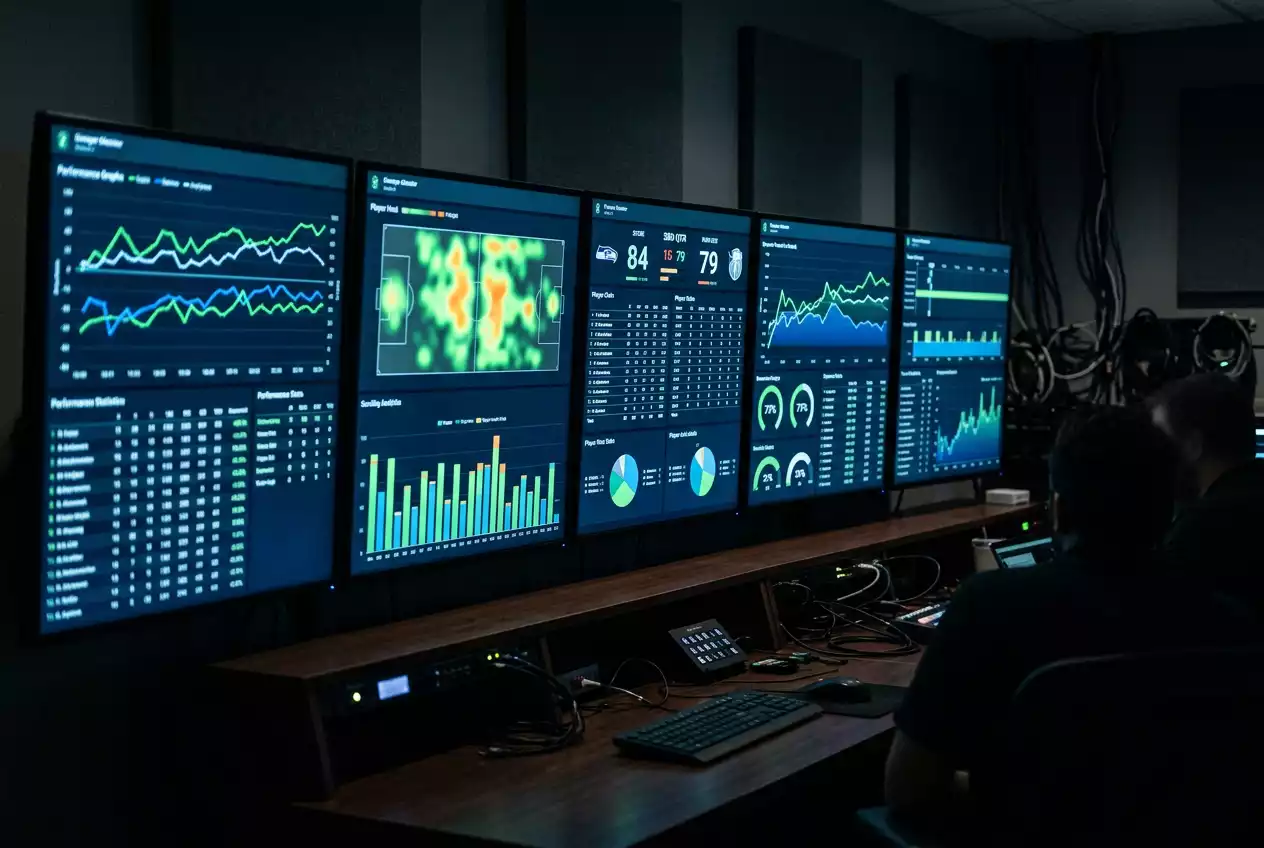
In January 2026, something happened that fundamentally changed how MMA fights are priced in real time. Sportradar and SWA Ltd launched the first AI-driven in-play betting model for MMA – a system that generates tens of thousands of potential fight outcomes every second and prices each one on the fly. I’d been waiting for this technology to arrive since I first heard about AI pricing in tennis five years earlier. Its application to combat sports was always a question of when, not if. And the “when” has arrived.
AI-Generated Outcomes and Real-Time Odds
Caspar Hobbs, CEO of SWA Ltd, described the science behind the model in characteristically direct terms: “Our science team has developed data driven bottom-up generative AI modelling that outputs tens of thousands of potential outcomes every second, pricing each one in real time.” The model doesn’t just predict who will win – it simulates the fight continuously, recalculating probabilities as new data flows in from the cage.
The “bottom-up” element is what distinguishes this from traditional odds compilation. A traditional MMA odds model starts with a top-down assessment: Fighter A is a 70% favourite based on their record, ranking, and historical data. An AI generative model starts from the micro-level – individual exchanges, positional transitions, strike counts, damage indicators – and builds the fight probability upward from those granular inputs. Every punch landed, every takedown stuffed, every clinch exchange changes the model’s output in real time.
Hobbs acknowledged the core challenge: MMA has been one of the fastest-growing sports globally for years, but its speed and complexity have historically made it difficult to model for betting. Unlike football, where the ball’s position and the score provide continuous state information, MMA fighters are in constant physical contact, exchanging damage across multiple dimensions simultaneously. The AI model processes this complexity by running thousands of parallel simulations based on the current state of the fight, then aggregating those simulations into a probability distribution that translates directly into odds.
Official UFC and PFL Data Feeds: What Gets Captured
The AI model doesn’t work in a vacuum – it requires high-quality, low-latency data. Sportradar’s partnership with UFC and PFL provides official data feeds that capture fight statistics in near real-time: significant strikes landed, takedown attempts and completions, positional control time, knockdowns, and submission attempts. This data is the raw material the AI processes.
Sportradar’s broader monitoring infrastructure has identified over 1,200 cases of suspicious betting activity from more than 850,000 monitored matches since deployment, leading to over 800 sanctions since 2005. The same data pipeline that powers the AI pricing model feeds the integrity monitoring system – a dual-use architecture that serves both commercial and regulatory purposes. When the AI detects a statistical anomaly in how a fight is unfolding (a fighter performing dramatically below their expected output, for instance), that signal feeds into both the odds adjustment and the integrity alert systems simultaneously.
For PFL events, the SmartCage technology adds a layer of data that traditional fight tracking can’t match: force measurement on strikes, real-time positional mapping, and biometric indicators. This richer dataset allows the AI model to price PFL fights with greater precision than UFC fights in some respects, because the input data is more detailed. Whether that precision advantage translates into sharper odds for bettors remains to be seen as the technology matures.
The Same Technology That Monitors Integrity
Sportradar CEO Carsten Koerl has framed integrity monitoring as inseparable from the commercial betting product. Protecting the game’s integrity is what enables the business to function in the betting markets and to expand, he noted during a 2025 earnings call. That’s not corporate virtue signalling – it’s a statement of commercial reality. If bettors lose confidence that MMA fights are legitimate, the betting handle collapses.
The technology operates on the same principle as the integrity alert systems used by IBIA and IC360: establish a baseline of expected activity, then flag deviations. The AI pricing model’s continuous simulation provides a sophisticated baseline – it knows, based on the current state of the fight, what the expected probability distribution should be. If the actual betting activity deviates significantly from what the model predicts, that discrepancy triggers an integrity review.
This creates a feedback loop that benefits both operators and bettors. More data feeding the AI model means better pricing, which means more betting volume, which means more data for integrity monitoring, which means better protection against manipulation. The virtuous cycle depends on the data pipeline remaining robust and the cooperation between Sportradar, the promotions, and the regulators staying functional.
What AI-Powered Odds Mean for the Average MMA Punter
For recreational bettors, the immediate impact of AI-powered odds is better in-play pricing. Before this technology, live MMA odds were set by human traders reacting to what they saw on screen – a process that was slow, subjective, and inconsistent. The AI model removes most of that subjectivity, producing odds that update faster and reflect the current state of the fight more accurately.
For sharp bettors, the picture is more nuanced. AI pricing reduces some of the soft spots that analytical bettors have historically exploited in live MMA markets. When the AI can process a takedown’s impact on fight probability in sub-second timescales, the window for a human bettor to react to that same information and find value narrows dramatically. The in-play edges that existed in 2022 are already smaller in 2026.
But AI models are not omniscient. They’re trained on historical data, which means they inherit the biases and limitations of that data. A fighter who debuts a new skill set – a striker who’s been secretly training grappling for six months, for example – will confound the model until the new data overwrites the old assumptions. Similarly, the AI model may struggle with fighters who have limited data histories, such as UFC debutants or fighters moving between promotions with different statistical tracking systems.
In-play MMA betting accounts for a growing share of total handle, with European markets already seeing 60-80% of turnover generated in-play, per JMP Securities analysis via Nasdaq. Analysts project a 25% compound annual growth rate for in-play markets this decade. The AI technology doesn’t just serve that growth – it enables it, by making live MMA odds reliable enough that operators can confidently offer deep in-play market menus. The technology is the infrastructure. The betting volume is the result.
How does Sportradar’s AI model differ from traditional odds compilation?
Traditional MMA odds compilation relies on human traders who assess fighter records, rankings, and recent form to set pre-fight prices, then manually adjust during the fight based on what they observe. Sportradar’s AI model uses generative simulation – running tens of thousands of potential fight outcomes per second based on real-time data from official feeds. The model continuously recalculates probabilities as strikes land, takedowns occur, and positional control shifts, producing odds that update in sub-second timeframes. The result is faster, more granular, and less susceptible to individual trader bias.
Does AI-powered pricing make it harder for bettors to find value?
In live betting markets, yes – AI reduces the reaction time advantage that sharp bettors previously exploited against human traders. The model processes fight data faster than any human can, which narrows the window for placing bets at mispriced odds during a fight. In pre-fight markets, the impact is less direct, since pre-fight odds are influenced by public betting patterns and media narratives that AI doesn’t fully capture. Bettors who derive value from matchup analysis, contextual factors, and information the AI model hasn’t been trained on can still find edges, particularly in less liquid markets.
Written by the editors at Betting on mma Fights.