Fractional Prices and MMA Betting Odds
 Available in US
Table of Contents
- Fractional Odds: UK Standard Pricing Models
- Decimal Odds: Why Most Online Platforms Default Here
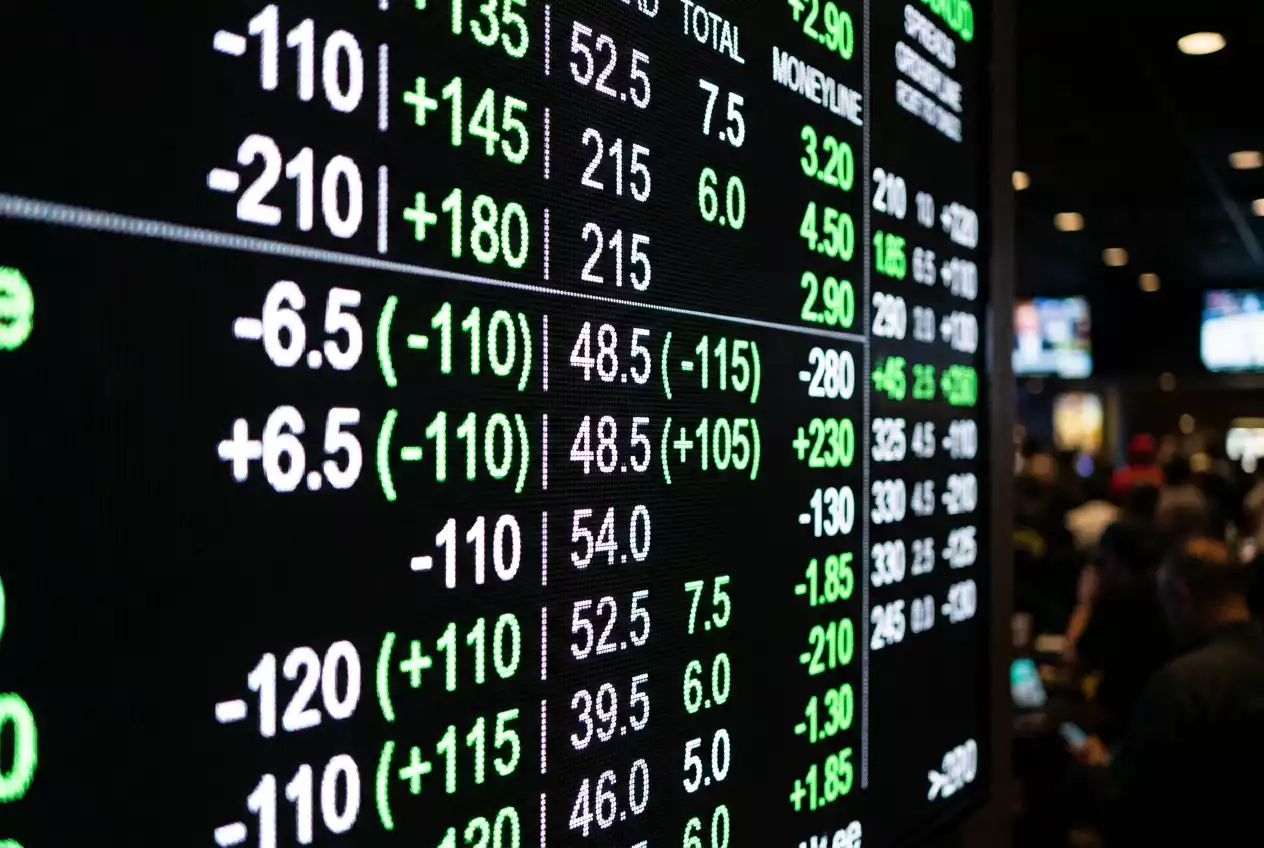
- American (Moneyline) Odds and When You Will See Them
- Implied Probability and the Bookmaker Margin
- Why MMA Odds Shift Before and During a Fight
- Reading the Odds Board: Practical Walk-Through
- Frequently Asked Questions
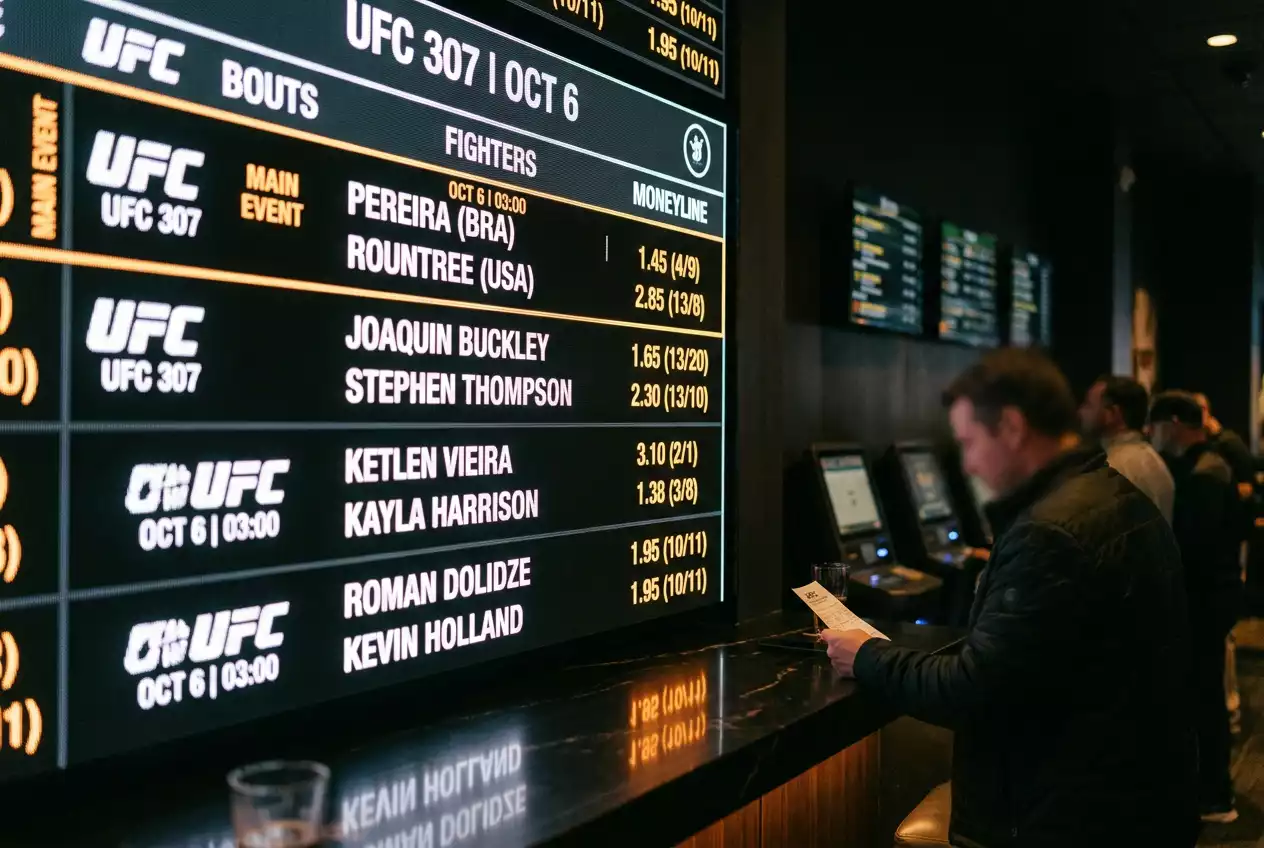
The first time I saw MMA odds displayed three different ways on three different platforms, I assumed someone was making a mistake. One site showed 4/1, another showed 5.00, and a third showed +400. All three meant exactly the same thing. The confusion cost me nothing that day, but the broader lesson, that odds are a language, not a fact, has been worth thousands of pounds over nine years of betting combat sports.
MMA odds tell you two things simultaneously: what the bookmaker believes about a fight’s outcome, and what you stand to collect if your bet wins. The format changes depending on the platform, the market, and the audience, but the underlying information is identical. Learn to read all three formats fluently, understand the margin baked into every price, and you stop seeing numbers on a screen and start seeing opportunities and traps.
This guide breaks down fractional, decimal, and American odds formats with MMA-specific examples, then moves into the mechanics that most betting guides skip entirely: implied probability, bookmaker margin, and why MMA lines move more violently than almost any other sport. By the end, you will not just read odds, you will read what the odds are trying to tell you about a fight, and more importantly, what they might be getting wrong.
Fractional Odds: UK Standard Pricing Models
Walk into any betting shop on a British high street and the odds on the screens are fractional. 5/1. 2/1. 4/9. This is the format most UK punters grew up with, and it communicates one thing clearly: the ratio of profit to stake. At 5/1, you win five pounds for every one pound wagered. At 4/9, you win four pounds for every nine risked, a favourite’s price that tells you the bookmaker considers this outcome very likely.
In MMA, fractional odds are most common on traditional UK-facing platforms. A typical fight might look like this: Fighter A at 4/6 (favourite) versus Fighter B at 11/8 (underdog). To calculate your return at 4/6, divide four by six (0.667), multiply by your stake, and add the stake back. A ten-pound bet at 4/6 returns 16.67 pounds total – 6.67 profit plus your original ten.
The quirk of fractional odds is that they can obscure the true probability gap between fighters. The difference between 1/3 and 1/4 looks tiny on screen – just one number changes – but in probability terms, 1/3 implies 75% and 1/4 implies 80%. That five-percentage-point gap represents a meaningful difference in how the market views the fight. For MMA, where margins between fighters are often razor-thin, these small numerical shifts can represent significant disagreements about the likely outcome.
Fractional odds also create an odd psychological effect. A price of 1/1 (evens) feels intuitively like a coin flip, and it is, after you strip out the margin. But 10/11 (just below evens) looks almost identical and yet implies approximately 52.4% probability. Experienced MMA bettors learn to convert fractional odds to implied probability before making any decision, because the fraction itself can mislead the eye.
One pattern I have noticed over the years: casual MMA bettors gravitate toward clean fractional numbers. A fighter priced at 2/1 attracts more recreational money than one priced at 9/4, even though 9/4 offers a better return. The clean number feels more “real”, a psychological artefact of how we process fractions. Sharp bettors exploit this by looking at the messier fractions where public money is thinner and lines can be softer as a result.
Decimal Odds: Why Most Online Platforms Default Here
Most online sportsbooks default to decimal odds, and for good reason. Decimal is the cleanest format for doing quick maths in your head. The number you see is your total return per pound staked. Fighter A at 1.67 returns 1.67 pounds for every pound bet (0.67 profit). Fighter B at 2.38 returns 2.38 pounds (1.38 profit). No fractions, no mental gymnastics. Multiply stake by decimal price, and you have your total payout.
Mobile platforms, which generate 55% of combat sports betting revenue globally per Verified Market Reports, almost universally favour decimal display. The format works better on small screens where fraction notation (13/8, 11/10) creates visual clutter. It also translates cleanly across international markets, a European bettor, an Australian, and a UK punter all read 2.50 the same way.
Converting between fractional and decimal is mechanical. Take the fractional odds, divide the numerator by the denominator, then add one. So 5/2 becomes (5 / 2) + 1 = 3.50. Going the other way, subtract one from the decimal price and express the result as a fraction: 3.50 minus 1 = 2.50, which simplifies to 5/2.
Where decimal odds reveal their real value is in comparing prices across platforms. If one operator offers 2.40 and another offers 2.50 on the same fighter, you can see instantly that the second platform gives a better price. With fractional odds, comparing 7/5 to 3/2 requires a conversion step that slows you down. In MMA, where line shopping matters because odds can vary significantly between operators, that speed advantage is practical, not theoretical.
One subtlety worth noting: decimal odds of 2.00 represent an implied probability of exactly 50% before margin, the true coin-flip line. Anything below 2.00 is a favourite; anything above is an underdog. This makes it easy to glance at a board and immediately sort every fight into favourite/underdog categories without reading the full price. For a sport where 40% of the fan base is millennials aged 18 to 34, per PlayToday and BetMGM surveys, the intuitive simplicity of decimal odds matches the audience’s expectations for clean digital interfaces.
American (Moneyline) Odds and When You Will See Them
If you follow MMA media from the United States, podcasts, YouTube breakdowns, Twitter/X analysts – you will encounter American odds constantly. They look alien at first: -250, +180, -400. But once you crack the logic, they become another tool in the kit.
American odds work on a base unit of 100. A negative number tells you how much you need to stake to win 100. So -250 means you must risk 250 to profit 100. A positive number tells you how much you win on a 100 stake. So +180 means a 100 stake returns 180 profit. The negative sign always marks the favourite; the positive always marks the underdog.
Converting to decimal: for negative American odds, divide 100 by the absolute value, then add 1. So -250 becomes (100 / 250) + 1 = 1.40. For positive odds, divide the number by 100 and add 1. So +180 becomes (180 / 100) + 1 = 2.80.
UK bettors rarely need to bet in American format, but understanding it is essential for consuming American MMA betting content. When a US-based analyst says “I see value at +250,” you need to know instantly that this translates to 5/2 fractional or 3.50 decimal. Most of the publicly available MMA statistical analysis comes from American sources, and their entire framework references American odds. Being fluent in the format means you can absorb that analysis without pausing to translate.
There is one practical scenario where UK bettors encounter American odds directly: when using odds comparison tools or tracking line movements across international sportsbooks. Many line-tracking services display American format by default. If you are monitoring how a UFC main event price moves across fifteen different operators worldwide, you need to parse -150, +130, -200 as naturally as you read 4/6 or 2.30. The conversion becomes second nature after a few weeks of practice, but those first few weeks can feel like reading a foreign language while the market moves around you.
Implied Probability and the Bookmaker Margin
Here is a number most MMA betting guides never mention: the overround. Also called the vig, the juice, or simply the margin, it is the percentage by which the total implied probabilities of all outcomes exceed 100%. And it is the single most important concept for understanding why odds are not probabilities, they are probabilities with a tax.
To find implied probability from decimal odds, divide 1 by the decimal price. Fighter A at 1.50 implies 1 / 1.50 = 66.7%. Fighter B at 2.80 implies 1 / 2.80 = 35.7%. Add those together: 66.7 + 35.7 = 102.4%. That extra 2.4% above 100 is the overround, the bookmaker’s built-in edge. It means that even if you bet both sides of a fight proportionally, you would lose 2.4% of your total stake in the long run.
MMA overrounds vary by market and by operator. Main event moneylines on competitive fights typically carry a tight overround of 3-5%. Preliminary card fights, props, and exotic markets might run 6-10% or higher. The deeper the market, the tighter the margin, because deep markets attract more sophisticated bettors who punish inefficient pricing.
Online gross gaming yield from real-event betting in the UK reached 596 million pounds in the January-March 2025 quarter alone, per the Gambling Commission. A meaningful slice of that revenue comes directly from overrounds. Understanding the margin does not eliminate it, but it does let you compare operators intelligently. If one platform offers a 3% overround on a UFC main event moneyline and another offers 5%, the first platform is giving you better value – even if the individual prices look similar at a glance.
The practical takeaway: every time you look at MMA odds, mentally convert to implied probability first. If your own analysis says a fighter wins 60% of the time and the market implies 55%, that five-point gap is your potential edge. If the market implies 65%, the fight is priced beyond your assessment, and no amount of emotional conviction changes the maths.
I keep a simple spreadsheet where I log my pre-fight probability estimates alongside the market-implied numbers. Over hundreds of fights, the gap between my estimates and the closing line tells me whether I am genuinely finding mispriced fights or just convincing myself that I am. The overround makes this exercise harder than it looks, because you need to beat not just the “true” probability but the true probability plus the margin. That is the hurdle every MMA bettor faces, and most never bother to measure it.
Why MMA Odds Shift Before and During a Fight
I once watched a fighter’s odds move from 2/1 underdog to 4/5 favourite in the space of 72 hours. No public injury report, no press conference bombshell – just a steady, relentless wave of money from informed bettors who knew something the rest of the market did not. By fight night, the move looked obvious in hindsight. In the moment, it was a lesson in how MMA odds live and breathe.
MMA lines move for several reasons, and understanding the pattern tells you what the market knows. The most common driver is sharp money – large, early bets placed by professional or semi-professional bettors whose track record earns them respect (and often restriction) from bookmakers. When sharp money lands on one side, the operator adjusts the line to balance risk. Recreational bettors typically follow later, amplifying the move.
Information asymmetry drives the most dramatic shifts. In team sports, rosters are public and injury reports are mandated. In MMA, a fighter’s camp quality, sparring injuries, weight cut progress, and mental state are largely private until fight week, and sometimes until weigh-in day. A well-connected bettor who learns about a problematic weight cut or a training camp injury three days before the public can exploit the gap before the line adjusts.
In-play odds are another dimension entirely. SWA and Sportradar launched the first industry AI-powered in-play pricing model for MMA in January 2026, using official data feeds from UFC and PFL. SWA CEO Caspar Hobbs described the technology as generating tens of thousands of potential outcomes every second, pricing each one in real time. That means live MMA odds now update between rounds with a precision that was impossible just two years ago. A knockdown in round one does not just shift the moneyline – it reprices every method of victory line, every round total, and every fighter prop simultaneously.
For bettors, line movement is information. A line that moves toward your position after you bet is confirming evidence, the market agrees with your read. A line that moves away suggests the market has information you lack. Neither scenario changes the bet you have already placed, but both inform how you approach the next one.
There is a specific MMA phenomenon worth understanding: the weigh-in swing. MMA is the only major sport where athletes publicly reveal their physical condition – stripped to underwear, standing on a scale – less than 24 hours before competition. A fighter who looks gaunt, dehydrated, or visibly drained on the scale can trigger a sudden wave of money on his opponent. I have seen lines move two full points in decimal odds between the weigh-in broadcast and the first fight of the night. If you bet pre-weigh-in, you are betting blind on a variable that routinely moves lines. If you wait until after the weigh-in, you sacrifice early-mover value but gain a significant informational advantage.
Social media amplifies these movements. A single tweet from a credible MMA journalist reporting that a fighter “looked off” at open workouts can trigger enough recreational money to shift a line before the bookmaker has verified the information. The speed of modern odds adjustment means these windows are narrow – minutes, not hours – but they exist, and attentive bettors exploit them regularly.
Reading the Odds Board: Practical Walk-Through
Let me walk through a real-world example to tie everything together. Imagine a UFC Fight Night main event between two welterweights. The opening odds on your platform show:
Fighter A: 1.55 (decimal) / 11/20 (fractional), the favourite.
Fighter B: 2.60 (decimal) / 8/5 (fractional), the underdog.
Step one: convert to implied probability. Fighter A: 1 / 1.55 = 64.5%. Fighter B: 1 / 2.60 = 38.5%. Total: 103%. The overround is 3%, which is tight, this is a well-priced main event market.
Step two: strip the margin. To find the “true” implied probabilities, divide each fighter’s implied probability by the total. Fighter A: 64.5 / 103 = 62.6%. Fighter B: 38.5 / 103 = 37.4%. These are the bookmaker’s margin-free estimates of each fighter’s win probability.
Step three: compare to your own assessment. Your research says Fighter A wins 58% of the time. The market says 62.6%. That four-point gap means the market is more confident in Fighter A than you are – which makes Fighter B the value side in your model. At a true 42% win probability (your estimate) priced at 37.4% implied, there is a 4.6-point overlay on the underdog.
Step four: check method of victory and round markets for a sharper expression. If your analysis says Fighter B wins specifically by late submission because Fighter A fades in championship rounds, the “Submission by Fighter B” line might pay 6.00 or higher. That specificity sharpens your edge – if your thesis is correct about the how, not just the who.
This process takes less than two minutes once you have practised it. The numbers change every fight card, but the framework stays the same: convert, strip margin, compare to your model, then find the market that best expresses your edge.
One more thing worth noting about reading the board in practice: fight cards present multiple fights simultaneously, and the temptation is to scan every line looking for obvious value. Resist that urge. Focus your deepest analysis on two or three fights per card where your research is strongest. A confident, well-researched position on a single fight is worth more than a scattered glance across twelve bouts. The board is there to inform, not to overwhelm – and the best bettors I know ignore more fights than they bet.
Frequently Asked Questions
Why do MMA odds change so much between the initial announcement and fight night?
MMA odds are more volatile than most sports because of information asymmetry. Training camp injuries, weight cut issues, tactical adjustments, and sparring footage rarely become public until fight week. When insiders or sharp bettors act on private information early, the line moves. Public bettors then pile on, amplifying the shift. A fighter’s odds can swing by 30-40% between opening and closing in extreme cases.
What is overround and how does it affect MMA betting value?
The overround is the percentage by which the total implied probabilities of all outcomes exceed 100%. It represents the bookmaker’s built-in margin. On a two-way MMA moneyline, a 4% overround means the combined implied probabilities add up to 104%. You can calculate it by converting each fighter’s odds to implied probability and summing them. Lower overrounds mean better value for bettors – main event moneylines typically carry 3-5% while prop markets can reach 8-10%.
How do I convert between fractional, decimal, and American odds quickly?
Fractional to decimal: divide the fraction and add 1. So 5/2 becomes 2.5 + 1 = 3.50. Decimal to fractional: subtract 1, then express as a fraction. So 3.50 becomes 2.50, which is 5/2. Decimal to American: if below 2.00, use -(100 / (decimal – 1)); if above 2.00, use +((decimal – 1) x 100). So 1.50 becomes -200 and 3.50 becomes +250. With practice, these conversions become automatic.
Do odds formats affect the payout I receive?
No. The format is purely a display preference. Odds of 5/2 fractional, 3.50 decimal, and +250 American all produce exactly the same payout on the same stake. A ten-pound bet returns 35 pounds total (25 profit) regardless of which format your platform uses. The only thing that changes is how the number is presented on screen. Choose whichever format feels most intuitive for your mental arithmetic.
Written by the editors at Betting on mma Fights.