Broadcast Contracts and UFC Media Rights Deals
 Available in US
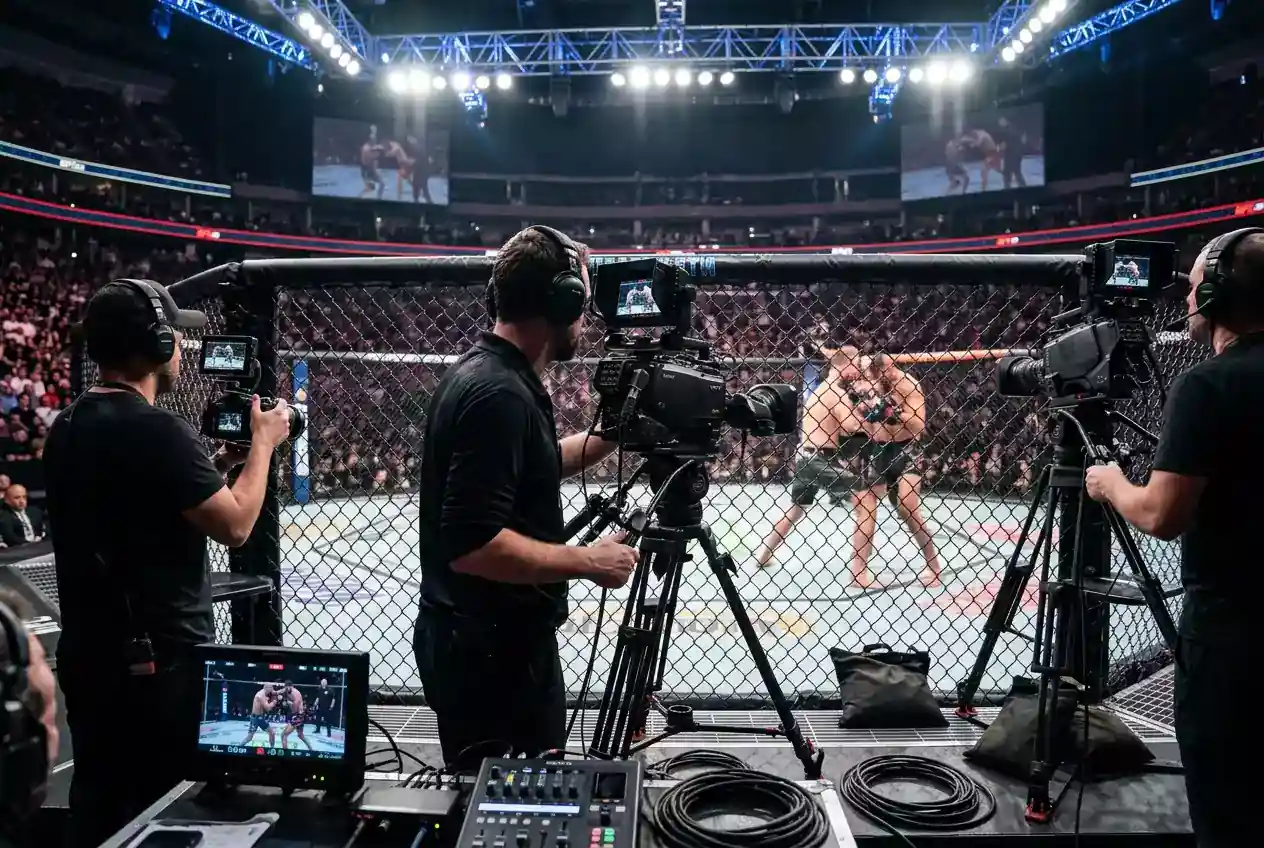
When Paramount signed its $7.7 billion deal with the UFC in 2025, the headlines focused on the eye-watering sum. What they missed was the downstream effect on betting. More broadcasts mean more viewers. More viewers mean more bettors. More bettors mean deeper liquidity, sharper odds, and a fundamentally different market for anyone who wagers on MMA fights. I’ve watched this chain reaction unfold in real time, and the UFC’s media rights trajectory has done more to reshape MMA betting than any single regulatory change or technological innovation.
Paramount Contract: $7.7B Betting Market Impact
The seven-year Paramount agreement, valued at approximately $1.1 billion annually, made UFC one of the most expensive sports media properties in the world. Paramount’s chairman, David Ellison, called it an opportunity to partner with “a global sports powerhouse” with “extraordinary global recognition, scale, and cultural impact.” That’s not just corporate rhetoric – it translates directly into broadcast infrastructure.
More broadcasts across more platforms in more territories means more eyeballs on every fight card. UFC already reached approximately 950 million households across 210 countries before the Paramount deal. The new agreement expands access further, particularly through streaming platforms that reach younger demographics who are more likely to bet on the fights they’re watching. The connection between viewing and wagering is well-established in sports media research, and MMA’s intense, emotionally engaging format makes that connection stronger than in most sports.
For UK bettors specifically, the Paramount deal signals continued investment in broadcast quality and accessibility. As UFC events become easier to watch legally in the UK, the live betting market expands – because in-play wagering requires the bettor to be watching the fight, and better broadcast access removes the friction that previously limited the live market’s reach.
More Broadcasts, More Bettors: The Audience-Handle Connection
UFC boasts roughly 700 million fans globally and approximately 330 million social media followers, per TKO Group Holdings data. Among fans aged 18-29, UFC generates 31% of engagement feedback – significantly higher than comparable entertainment properties like WWE at 20%, according to HundredX research. That younger audience is the demographic most likely to place bets on the content they consume.
The audience-to-handle pipeline works like this: broadcast exposure creates fans, fan engagement drives betting interest, betting interest increases handle (total money wagered), and higher handle deepens market liquidity. Deeper liquidity makes odds more efficient and reduces the margin available to both bookmakers and sharp bettors. In practical terms, the Paramount deal accelerates the maturation of MMA betting from a niche market with soft odds to a mainstream market with sharper pricing.
The UK’s position as a top-five UFC market, per TKO Group Holdings data, means British viewers and bettors are a primary target of this expansion. The Paramount deal doesn’t just put more fights on television – it funds production improvements, pre-fight content, and the kind of storytelling that draws casual viewers into the sport. Each new viewer is a potential bettor, and the UK’s established gambling culture means the conversion rate from viewer to bettor is among the highest in the world.
That’s a double-edged outcome. For recreational bettors, sharper odds mean slightly worse value on the most popular markets. For analytical bettors, deeper liquidity means larger bet sizes are accepted without moving the line, which is valuable if you’ve identified a genuine edge. The market is growing up, and the media rights landscape is the engine driving that growth.
Betting Sponsorships: From DraftKings to bet365
The DraftKings partnership with UFC, signed in 2021, was a landmark deal: $350 million over five years, comprising roughly $100 million in cash and approximately $250 million in marketing commitments. At the time, it was the largest betting sponsorship in combat sports history and signalled that major operators viewed MMA as a first-tier betting product, not a sideshow.
Trip Stoddard, bet365’s Head of Development, described the UFC partnership as “a defining moment” for the operator, emphasising that UFC’s event calendar and engaged fan base create a powerful environment for real-time betting. That framing – real-time, engagement, always-on – reflects how betting operators now think about MMA. It’s not seasonal. There’s no off-season. The UFC runs events nearly every weekend, which gives betting operators a continuous revenue stream that’s rare outside football.
The transition from DraftKings to bet365 as the UFC’s official US and Canadian betting partner in March 2026 reshuffled the competitive landscape. For UK bettors, bet365’s global presence and existing UK customer base means tighter integration between the UFC viewing experience and the betting interface. UFC sponsorship revenue hit $314.3 million in 2025 – a 25% year-on-year increase per SponsorUnited data – and betting operators account for a growing share of that spend.
How UK Viewers Access UFC and What That Means for In-Play Volume
UK access to UFC events has evolved significantly over the past five years. The current broadcast landscape gives UK viewers multiple access points for live events, which directly affects the in-play betting volume that operators can capture.
In-play betting accounts for an estimated 60-80% of sports betting turnover in Europe, compared to 30-40% in the US, per JMP Securities analysis via Nasdaq. MMA’s round-by-round structure is particularly well-suited to live wagering because the breaks between rounds provide natural windows for bettors to reassess and place new bets. Every expansion of UFC broadcast access in the UK – whether through new streaming deals, free-to-air previews, or social media highlights that draw viewers to live events – feeds directly into this in-play volume.
The bet365 partnership amplifies this dynamic. As the UFC’s official partner with deep UK market penetration, bet365 can integrate UFC content with its betting platform more seamlessly than a non-partner operator. That integration might include embedded odds within streaming interfaces, push notifications timed to fight card events, or exclusive in-play markets tied to the official data feed. Each of these innovations makes it easier for UK viewers to move from watching a fight to betting on it – a pipeline that the media rights deals have engineered by design.
For the analytical bettor, the practical takeaway is that in-play MMA markets will continue to deepen. More volume, more market options, and more data-driven pricing are the inevitable consequences of the media rights expansion. The era of soft in-play MMA odds is narrowing, but it hasn’t closed yet.
How did the UFC-Paramount media deal change betting market accessibility?
The $7.7 billion Paramount deal expanded UFC’s broadcast reach across streaming and traditional platforms, making live events accessible to a larger audience globally. For betting markets, this increased viewership translates into higher betting volumes, deeper market liquidity, and more in-play betting activity. UK bettors benefit from improved legal access to live events, which supports real-time wagering on fights they can actually watch.
Does more UFC broadcast exposure lead to sharper or softer odds?
More exposure generally leads to sharper odds over time. As viewership grows, betting volumes increase, and more money – including sharp money from professional bettors – flows into the market. This deeper liquidity makes odds more efficient and reduces the margin of mispricing available to both bookmakers and bettors. However, the sharpening effect is strongest on high-profile fights. Lower-profile events and undercard bouts may retain softer odds even as overall market liquidity increases.
Created by the ”Betting on mma Fights” editorial team.