Value Odds and Effective MMA Betting Strategy
 Available in US
Table of Contents
- Finding Closing Line Value in MMA Betting Markets
- Building a Fighter Analysis Framework
- Stylistic Matchups Over Raw Records
- Situational Angles: Camp Changes, Layoffs, and Short Notice
- Why MMA Rewards Underdog Bettors More Than Most Sports
- Five Costly Mistakes and How to Avoid Them
- Frequently Asked Questions

Two years into betting MMA, I thought I had a strategy. I studied fighter records, watched highlight reels, and backed whoever “felt” like the better competitor. My bankroll told a different story – flat over hundreds of bets, slowly eroding from the margin. The turning point came when I stopped asking “who wins this fight?” and started asking “where has the market mispriced this fight?” That single shift in framing changed everything.
MMA betting strategy is not about predicting winners. You do not need to be right more often than the market. You need to find the fights where the market’s probability estimate is wrong, and express that disagreement through the right bet at the right price. UFC’s gross gaming revenue has grown at a compound annual rate exceeding 18% over the past five years, per Fight Matrix analysis. That growth has attracted sharper bettors, more data, and tighter lines. Finding genuine edges requires more than casual fandom. It requires a repeatable analytical process.
Finding Closing Line Value in MMA Betting Markets
Value is the most overused and least understood word in betting. Every tipster claims to offer it. Very few can define it mathematically. In MMA, value exists when the true probability of an outcome exceeds the implied probability embedded in the odds. If you genuinely believe a fighter wins 45% of the time and the market prices him at 35% implied, that ten-point gap is value – regardless of whether the fighter actually wins the fight.
This is the part that trips up most MMA bettors: value and winning are not the same thing. A value bet loses more often than it wins if the true probability is below 50%. But over hundreds of bets, consistently finding positive-expected-value positions produces profit, the same way a casino profits from a 2% house edge even though individual customers win regularly.
The practical challenge is estimating “true probability” with any accuracy. MMA fights involve two individuals with complex, interacting skill sets competing under rules that allow knockouts, submissions, and decisions. No model captures this complexity perfectly. But you do not need perfection. You need to be right often enough, and by a wide enough margin, to overcome the bookmaker’s overround. In my experience, the fighters and fights where I have the strongest informational edge produce the most reliable value over time. Fights I watch casually and bet on impulse produce noise.
Here is my working definition: value is the gap between what I believe and what the market believes, measured in probability points, after I have done enough research to trust my own number. If I have not done the research, I have no basis for claiming value. The price alone tells me nothing without a benchmark to compare it against.
One trap I see constantly: bettors confuse a “big price” with “value.” A fighter at 8/1 is not automatically value just because the payout is attractive. If the true probability of that fighter winning is 10% and the implied probability at 8/1 is about 11%, there is no value, the market has actually priced the fight accurately despite the long odds. Value exists at any price point. A fighter at 4/7 can represent genuine value if the true probability is 70% and the implied probability is only 58%. The number on the screen matters less than the gap between the number and reality.
A profitable and sustainable approach relies heavily on analyzing MMA fighter statistics to predict outcomes accurately.
Building a Fighter Analysis Framework
Every serious MMA bettor needs a framework, a structured way of evaluating fighters that goes beyond record and reputation. Mine has evolved over the years, but the core has stayed the same: break each fighter into measurable components, compare those components against the specific opponent, and look for asymmetries the market might underweight.
The starting point is data. More than 300 million people follow MMA globally, and the UFC alone reaches approximately 950 million TV households across 210-plus countries and territories, per UFC and Paramount. That massive audience generates an equally massive data ecosystem. Free platforms track detailed fighter statistics going back years, strikes landed, strikes absorbed, takedown accuracy, submission attempts, control time, and dozens of derivative metrics.
But raw statistics without context are dangerous. A fighter who averages six significant strikes per minute sounds like a volume machine – until you realise those numbers came against three opponents who were all plodding, flat-footed grapplers who walked into punches. Against a slick counter-striker, that same fighter might land half his usual output. Context turns data into insight.
My framework evaluates five dimensions for every fighter in a matchup: striking offence, striking defence, grappling offence, grappling defence, and cardio/durability. For each dimension, I look at the raw numbers, the quality of opposition those numbers were compiled against, and the trend line – is the fighter improving, declining, or static? The comparison between two fighters across these five dimensions produces a picture of where each fighter holds advantages and where each is vulnerable.
Key Striking Metrics at a Glance
Significant strikes per minute (SSpM) tells you a fighter’s output rate. Significant strike accuracy (SSAcc) tells you how often those strikes actually land. Significant strikes absorbed per minute (SApM) tells you how hittable a fighter is. These three numbers, taken together, paint a quick picture of how a striking exchange is likely to play out.
A fighter with 5.5 SSpM, 52% SSAcc, and only 2.8 SApM is elite on the feet – high output, accurate, and difficult to hit. Contrast that with a brawler at 6.0 SSpM, 41% SSAcc, and 5.2 SApM: similar output but wildly less efficient and far more hittable. The market often prices these fighters similarly based on finish rate or reputation, but the underlying striking data tells a very different story about sustainability and risk.
The metric I watch most closely for betting purposes is the differential: SSpM minus SApM. A positive differential means a fighter lands more than he absorbs. A negative differential means he is losing the striking exchange on volume. Over a large enough sample, positive differential correlates strongly with winning decisions and avoiding late-fight finishes. It is not glamorous, but it is predictive.
Grappling Metrics: Takedown Rate, Defence, and Control Time
Grappling in MMA is harder to quantify than striking, but three metrics do most of the heavy lifting. Takedown accuracy (TDAcc) measures how often a fighter successfully completes a takedown attempt. Takedown defence (TDDef) measures how often a fighter prevents being taken down. Control time, the minutes spent in dominant grappling positions per fight – captures what happens after the takedown lands.
A wrestler with 55% TDAcc and an opponent with 45% TDDef creates a predictable dynamic: the fight is likely to spend significant time on the ground. If the wrestler also accumulates 4-plus minutes of control time per fight, the decision angle becomes obvious. Conversely, a striker with 85% TDDef facing that same wrestler has the tools to keep the fight standing, and keeping the fight standing usually means a striking contest, which changes the entire method of victory calculus.
Control time is the metric the market most often undervalues. Judges score MMA rounds based on effective striking, effective grappling, aggression, and octagon control. A fighter who secures takedowns and holds top position for extended periods wins rounds even if he lands relatively few strikes from that position. Bettors who focus exclusively on knockouts and submissions miss the grinding, pace-controlling grapplers who win decisions consistently, and often at generous odds because their style is not visually exciting.
Stylistic Matchups Over Raw Records
A fighter’s record tells you where he has been. His style tells you where the fight is going. I learned this the hard way backing a 14-2 striker against an 8-4 grappler, assuming the record differential would hold. It did not. The grappler’s style – relentless chain wrestling, heavy top pressure, suffocating pace – was the exact archetype that gave slick strikers problems. The record said mismatch. The stylistic matchup said trap.
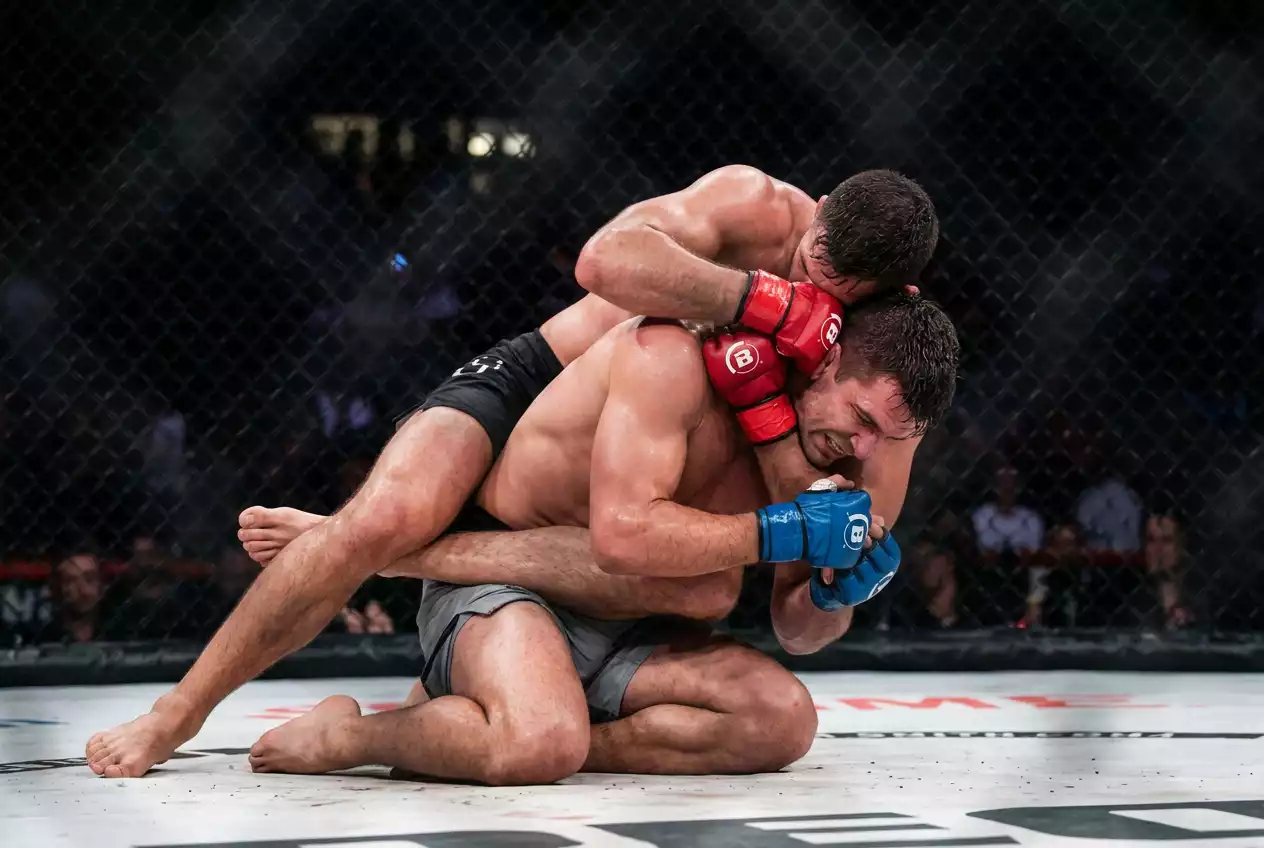
MMA is fundamentally a style-versus-style sport. A wrestler beats a striker by taking the fight to the ground. A striker beats a wrestler by stuffing takedowns and keeping distance. A submission artist beats a wrestler by accepting the takedown and attacking from bottom position. These rock-paper-scissors dynamics exist at every level of the sport, and the market does not always price them correctly.
The most profitable angle I have found over the years is identifying fighters whose statistical profiles mask a stylistic vulnerability against a specific opponent type. A striker with a 78% finish rate looks terrifying, until you notice that every one of those finishes came against opponents with below-average takedown ability. When that striker faces an elite wrestler for the first time, the market still prices the fight based on the finish rate. The stylistic mismatch tells a different story.
Record-based thinking also fails when fighters are on streaks. A four-fight winning streak inflates public confidence and compresses odds. But if those four wins came against opponents ranked outside the top fifteen, the streak tells you very little about how the fighter performs against elite competition. Style, opposition quality, and the specific matchup in front of you are always more predictive than the number next to a fighter’s name.
The best framework I have found for evaluating stylistic matchups involves asking a simple sequence of questions. Can Fighter A dictate where the fight takes place? If so, does that location – standing, clinch, or ground – favour him statistically? If Fighter B can redirect the fight to a different location, does his advantage there outweigh Fighter A’s advantage in the initial phase? These questions force you to think in terms of fight dynamics rather than static rankings, and they expose the matchup-specific vulnerabilities that raw records conceal.
Situational Angles: Camp Changes, Layoffs, and Short Notice
Situational factors are the variables that do not show up in any statistical database but routinely influence fight outcomes. Camp changes, layoff lengths, short-notice replacements, weight class moves, and personal circumstances all create edges for bettors willing to dig deeper than the numbers.
Trip Stoddard, head of development at bet365, described UFC’s event calendar as “always-on” when announcing the operator’s partnership as the UFC’s Official Sports Betting Partner. That always-on schedule – roughly 40-plus events per year – means fighters sometimes accept bouts on two or three weeks’ notice when original opponents withdraw. Short-notice fighters statistically underperform, particularly when stepping up in competition or changing weight classes simultaneously. The market adjusts for short notice, but rarely by enough. A fighter replacing someone on ten days’ warning against a fully camped opponent is at a structural disadvantage that goes beyond the modest line shift most operators apply.
Layoffs matter in the opposite direction. A fighter returning after 18 months away from competition faces ring rust, the subtle degradation of timing, distance management, and fight-specific conditioning that training alone cannot replicate. The market sometimes overcorrects for layoffs, pricing returning fighters too cheaply because the absence creates narrative uncertainty. But the data supports caution: fighters returning from layoffs of 12-plus months win at a meaningfully lower rate than their pre-layoff form would suggest.
Camp changes are harder to track but equally impactful. A fighter who leaves a major gym – whether by choice or conflict – and trains with a new team for the first time brings uncertainty. New coaches, new training partners, and new tactical approaches take time to integrate. The first fight under a new camp is a wildcard, and I treat it as such by reducing my confidence in any pre-fight projection.
Build a sustainable bankroll by following the advice provided by the leading MMA betting guide in the UK.
Why MMA Rewards Underdog Bettors More Than Most Sports
If there is one structural truth about MMA betting that separates it from football, tennis, or basketball, it is this: underdogs win more often. Not marginally more – significantly more. The combination of small gloves, multiple paths to victory, and the sheer unpredictability of one-on-one combat means that fighters priced at 3/1 or longer win at rates that routinely exceed what the odds imply.
Why does this happen? In team sports, talent depth smooths out variance. A football team with eleven players rarely gets upset by a squad of lesser individuals because the aggregate talent advantage is distributed across the whole pitch. In MMA, one fighter has one bad moment – drops his hands, gets caught in a transition, slips on sweat, and the fight is over. No teammates to compensate. No next quarter to recover. The variance inherent in individual combat creates structural value on underdogs that team sports do not offer.
The MMA and combat sports betting market, valued between $1.5 billion and $3.2 billion in 2024 depending on methodology per Verified Market Reports and Fight Matrix, has grown partly because this volatility attracts recreational bettors who love the thrill of long-shot payouts. But recreational bettors also create the mispricing: they pile onto favourites based on name recognition and highlight reels, pushing favourite prices down and underdog prices up beyond what the true probabilities justify.
My own records show a clear pattern over the past five years: flat-stake betting on underdogs between +150 and +300 (American odds, or roughly 5/4 to 3/1 fractional) produces a small but consistent long-term profit. Underdogs beyond +400 are too speculative for sustained profitability, and slight underdogs at +110 to +140 do not pay enough to justify the risk. The sweet spot sits in the middle – fighters the market underestimates but who possess clear, identifiable paths to victory.
Identifying which underdogs have genuine upset potential requires the same framework outlined above: stylistic matchup analysis, not just price watching. An underdog with elite wrestling facing a favourite who has poor takedown defence is a fundamentally different proposition from an underdog who is simply less skilled across every dimension. The first fighter has a clear path to winning. The second is a lottery ticket. Your job is to tell them apart before the market does. The global sports betting industry, valued at $32.86 billion in 2025 per Polaris Market Research, is built on the premise that most bettors cannot make this distinction consistently. Proving that premise wrong is the entire game.
Five Costly Mistakes and How to Avoid Them
Nine years of MMA betting has produced an extensive catalogue of my own errors. Five stand out as the most expensive and the most common among bettors I have spoken with.
Betting on name recognition instead of current form. A former champion returning after two losses still carries the aura of dominance. The market reflects that aura in the price. But the fighter in front of you today is not the fighter from three years ago. Age, injuries, motivation, and stylistic evolution all erode the edge that once made someone a champion. I now treat every fighter as a current-version product, not a historical brand.
Stacking heavy favourites into accumulators. This one is insidious because it feels safe. Four fighters at 1/4 each produce an accumulator that pays roughly 2.4/1. The problem: each leg carries roughly 80% individual probability, but the combined probability of sweeping all four is just 41%. You are laying 2.4/1 on a 41% chance. The margin destruction across multiple short-priced legs is brutal over time.
Ignoring camp and preparation context. I once backed a fighter who was a clear statistical favourite, only to learn post-fight that he had changed camps six weeks before the bout and trained with unfamiliar partners. The information was publicly available on social media – I simply did not look. Camp quality, sparring partners, coaching changes, and public training footage are all accessible. Not checking them is a choice, and it is a costly one.
Chasing losses across a fight card. A twelve-fight card offers twelve opportunities to compound a bad start. Losing on the first prelim and then increasing stakes on subsequent fights to “recover” is the fastest way to blow a monthly bankroll in a single session. I now set a hard loss limit per event – once I hit it, I close the app and review the card on tape the following week.
Betting every fight. Not every fight on a card presents value. Some fights are efficiently priced. Some involve fighters I have not researched. Betting them anyway out of boredom or completionism is a leak that drains bankrolls gradually and invisibly. The best bet on any given fight card is often no bet at all.
Frequently Asked Questions
How do you calculate expected value on an MMA bet?
Expected value (EV) equals the probability of winning multiplied by the profit if you win, minus the probability of losing multiplied by the stake lost. If you estimate a fighter wins 45% of the time at decimal odds of 2.80, your EV per pound staked is (0.45 x 1.80) – (0.55 x 1.00) = 0.81 – 0.55 = +0.26. A positive number means the bet has long-term profit potential. The difficulty lies in estimating that 45% accurately, your probability model must be better than the market’s for the calculation to hold.
Which fighter statistics matter most for predicting finishes versus decisions?
For finishes, focus on knockout rate, significant strikes landed per minute, and striking accuracy – fighters who land hard and often finish fights early. Submission finishes correlate with takedown accuracy and submission attempt frequency. For decisions, the strongest predictors are takedown defence (keeping the fight standing or controlling where it takes place), significant strike differential (landing more than absorbing), and control time. Fighters with high output but low finishing rates tend to grind out decisions consistently.
Should you specialise in one weight class or bet across divisions?
Specialising in two or three weight classes produces better results than betting across all divisions. Each weight class has its own pace, finish rates, and competitive dynamics. Heavyweights fight nothing like flyweights, the knockout rate, average fight duration, and underdog win frequency differ substantially. Narrowing your focus lets you build deeper knowledge of the active fighters, their stylistic tendencies, and how they match up against each other. I recommend picking divisions you genuinely enjoy watching and building your database from there.
Prepared by the Betting on mma Fights editorial staff.