Account Setup and First MMA Bets
 Available in US
I placed my first MMA bet in 2017 on a Saturday night prelim fighter I’d barely heard of – and got almost everything about the process wrong. Wrong market, wrong stake size, wrong platform. The fighter won, which only masked how badly I’d set myself up. Nine years and a few thousand wagers later, the mechanical side of MMA betting feels automatic, but I still remember that first night of fumbling through menus and second-guessing every click. This guide is the walkthrough I wish someone had handed me before that first slip.
The UK sits among the five largest UFC markets globally, per TKO Group Holdings data from 2026, and the infrastructure for betting on fights here is mature. UKGC-licensed platforms, fractional and decimal odds toggles, live streaming built into betting apps – the tools exist. The barrier is not access. The barrier is knowing how to use them without making expensive beginner mistakes. So let’s walk through the process from account creation to your first settled bet, one step at a time.
Before placing your first wager, it is crucial to read our comprehensive guide where MMA betting odds are explained in detail.
Registering Your UKGC-Licensed Betting Account
Before I even talk about odds or markets, the single most important decision you’ll make is where you open an account. I learned this the hard way when a mate used an offshore platform and spent three weeks chasing a withdrawal. The UK Gambling Commission exists specifically to prevent that kind of headache, and their licensing regime is one of the strictest in the world – the UKGC carried out 9,700 compliance actions in the 2024/2025 period alone, more than double the previous year’s figure according to FTI Consulting.
When you register with a UKGC-licensed operator, you’re protected by mandatory requirements: segregated player funds, transparent terms, enforceable dispute resolution, and responsible gambling tools baked into the platform. The registration process itself is straightforward but involves identity verification – typically a photo ID and proof of address. This isn’t optional bureaucracy. It’s a legal requirement under anti-money-laundering regulations, and most platforms complete the check within minutes using automated systems.
What to look for during setup: confirm the operator holds a UKGC licence (this is always displayed in the site footer), check that MMA is listed among their sportsbook offerings (not all operators cover combat sports in depth), and set deposit limits before you fund the account. Setting a limit first, before money is on the line, is the easiest responsible gambling step you’ll ever take – and the one most people skip.
Placing Your First MMA Bet: From Odds Board to Slip
My first bet took me about fifteen minutes to actually place because I kept staring at the odds board like it was written in another language. It isn’t – once you know the rhythm, it becomes second nature. Here’s the sequence.
Navigate to the MMA or UFC section of your sportsbook. Most UK platforms group MMA under its own tab, sometimes nested inside “Other Sports” or “Combat Sports.” You’ll see upcoming fight cards listed chronologically, with the next event at the top. Click into an event and you’ll see individual bouts, each showing the moneyline odds for both fighters. On UK platforms, odds default to fractional format – 4/1, 2/5, 11/8 – though you can usually toggle to decimal in your account settings.
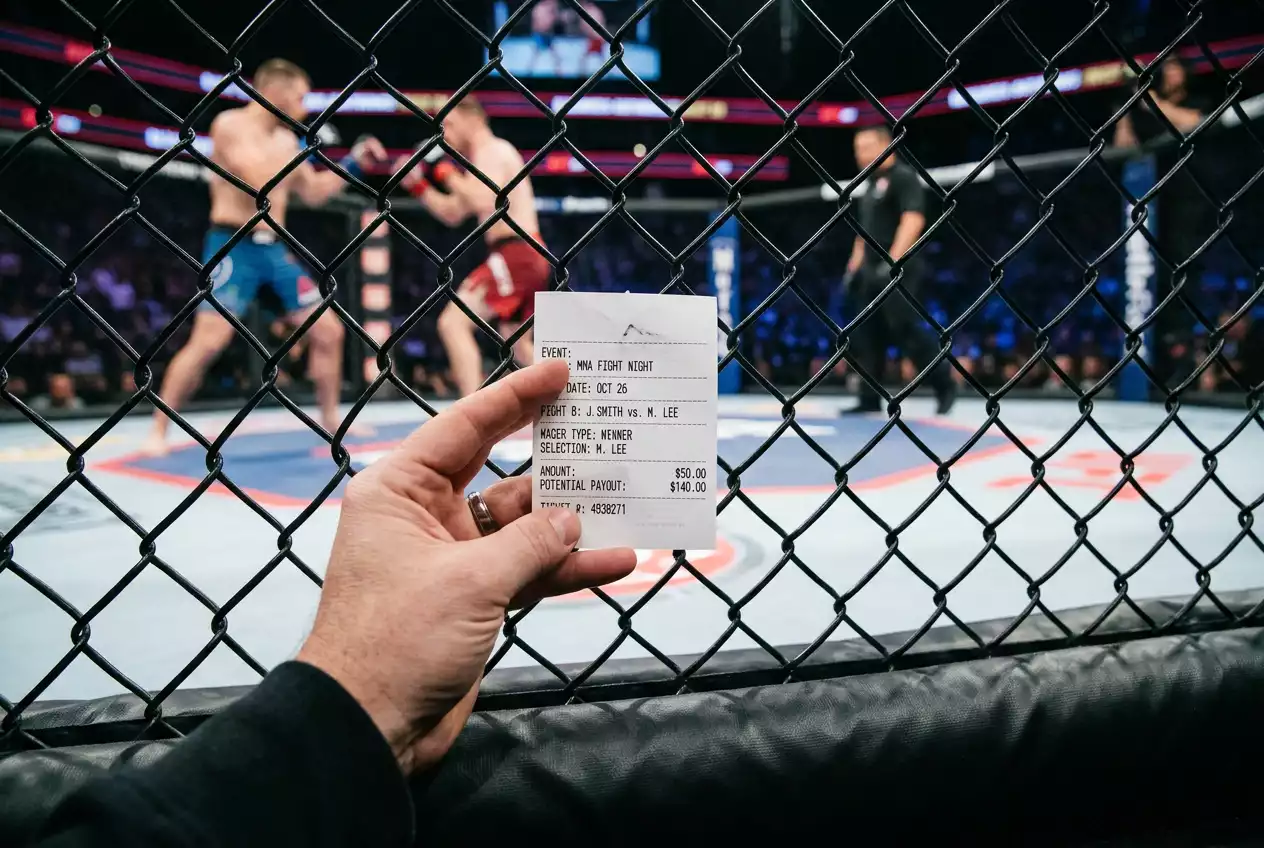
Tap on a fighter’s odds to add them to your bet slip. The slip appears (usually on the right side on desktop, at the bottom on mobile) and asks you to enter a stake. Type in the amount you want to wager. The slip calculates your potential return instantly: stake multiplied by the odds, plus your original stake back. For a simple moneyline bet at fractional odds of 3/1 with a GBP 10 stake, your potential return is GBP 40 (GBP 30 profit plus your GBP 10 back).
Before confirming, double-check three things: the correct fighter is selected, the stake matches what you intended, and the odds haven’t shifted since you added the selection (most platforms flag odds changes before you confirm). Hit “Place Bet,” and you’re done. The bet settles automatically once the fight concludes.
Reading a Fight Card Before You Bet
A fight card is not just a list of names – it’s a structured hierarchy, and understanding that hierarchy changes how you approach your bets. UFC events typically feature a main card (three to five bouts including the headliner), a preliminary card, and sometimes an early preliminary card. The main event sits at the top, usually a title fight or a marquee matchup between ranked contenders, and it gets the deepest market coverage from bookmakers.
Prelim fights receive less attention from both the betting public and the oddsmakers. That’s relevant because thinner markets can mean less precise odds – which cuts both ways. The lines might offer more value, but you’ll also find less data to work with. For your first few bets, I’d recommend sticking to the main card. The fighters are better known, the statistics are more comprehensive, and the markets are deeper.
The demographic tilt matters here too. Around 40% of the UFC’s fan base falls in the 18-34 age bracket, per PlayToday and BetMGM data. That’s a younger, digitally fluent audience that consumes fight breakdowns on YouTube and social media before events. You can use the same channels – embedded in fight week coverage you’ll find stance matchup analysis, recent form summaries, and striking data that directly informs your betting. The information asymmetry between MMA and traditional team sports is smaller than you’d think, because fight analysis content is so widely available.
For the most reliable predictions and market insights, always consult the top UK MMA betting platform before finalizing your bet slip.
Traps That Catch New MMA Bettors
The most expensive mistake I see beginners make is parlaying heavy favourites. It feels safe – stacking three fighters with short odds into one accumulator for a bigger return. The problem is that MMA produces upsets at a rate that makes those parlays far riskier than they appear on paper. One underdog win in your three-leg accumulator and the entire bet is dead. I’ve watched it happen to friends on nearly every major card.
Second trap: betting every fight on the card. A UFC event might feature twelve or thirteen bouts, and the temptation to have action on all of them is real, especially when you’re new and everything feels exciting. Resist it. I limit myself to two or three bets per card, maximum, and I’ve been doing this for years. Quality of analysis matters more than volume of bets.
Third: ignoring the context around a fight. Records and highlight reels don’t tell you about camp changes, injury recoveries, weight cut difficulties, or the fact that a fighter is coming off a twelve-month layoff. MMA is an individual sport, and the variables that affect performance are personal, not structural. A football team can absorb one player’s bad day. A fighter can’t.
Finally – and I cannot stress this enough – set a loss limit before the card starts. Decide how much you’re willing to lose across the entire event, and stop when you hit that number. The fights will still be entertaining. Your bankroll will thank you in the morning.
Do I need to understand MMA rules before I start betting?
A basic understanding helps. You should know how fights are scored, what constitutes a KO/TKO versus a submission versus a decision, and how the unified rules of MMA work. You do not need to be an expert – most UK betting platforms include brief explanations of fight outcomes alongside their markets. But knowing the difference between a split decision and a unanimous decision, for instance, directly affects how you evaluate method of victory bets.
What is the minimum deposit to bet on MMA fights in the UK?
Most UKGC-licensed platforms set minimum deposits between GBP 5 and GBP 10, though a few allow GBP 1. Minimum bet stakes are typically GBP 0.10 to GBP 1 depending on the operator and market. These thresholds are low enough that you can start with a small bankroll while you learn the mechanics of MMA betting without risking significant money.
Written by the editors at Betting on mma Fights.